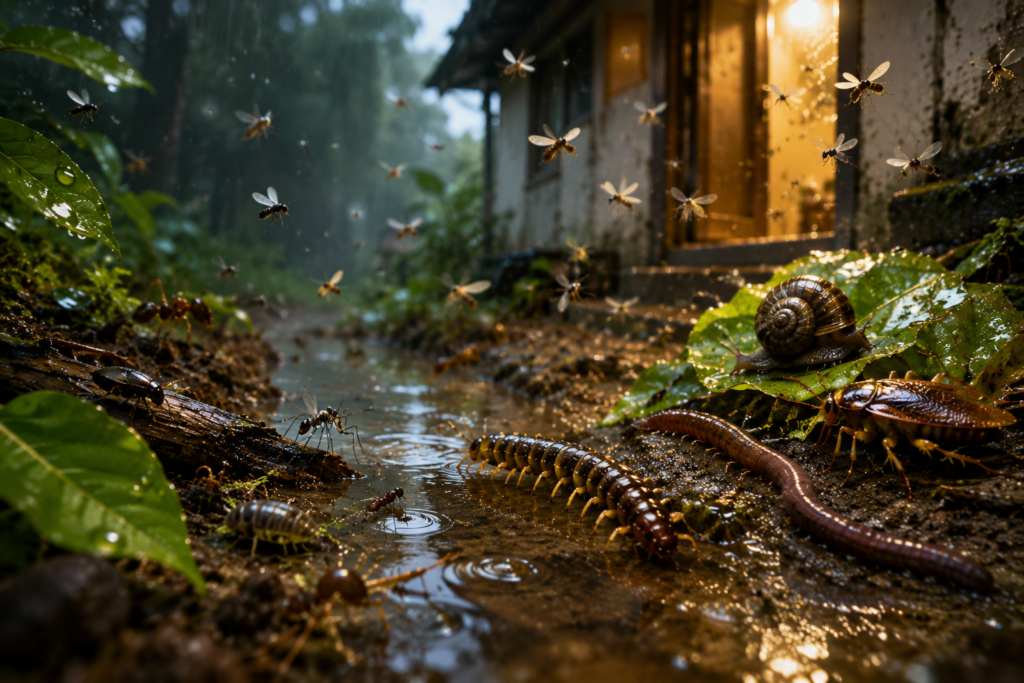
CHAPTER 1 — बारिश के बाद अचानक इतने जीव आते कहाँ से हैं?
Clip 1 — The transformation
बारिश इन जीवों को जादुई रूप से पैदा नहीं करती। वह moisture, temperature, temporary water और habitat conditions बदलती है, जिससे पहले से मौजूद organisms अधिक active या visible हो सकते हैं। U.S. Environmental Protection Agency
Clip 2 — Underground world
हमारे पैरों के नीचे soil और leaf litter में earthworms, ants, beetles, larvae और microorganisms जैसी विशाल hidden communities रहती हैं। Surface पर दिखने वाली life इस underground biodiversity का केवल एक हिस्सा है। University of Minnesota Extension
Clip 3 — Soil becomes alive
Moisture soil organisms के movement और feeding के लिए महत्वपूर्ण है। Adequate moisture और favorable environmental conditions कई soil organisms और microorganisms की activity को बढ़ा सकती हैं, हालांकि हर species की response अलग होती है। University of Minnesota Extension
Clip 4 — Temporary water
बारिश के बाद छोटे puddles temporary freshwater habitats बन सकते हैं। उपयुक्त conditions में mosquitoes और दूसरे aquatic organisms इनके पानी का उपयोग अपने life cycle के अलग-अलग stages के लिए कर सकते हैं। U.S. Environmental Protection Agency
Clip 5 — Plants explode with activity
बारिश के बाद उपलब्ध water plants की growth और physiological activity को support कर सकता है। पौधों पर उपलब्ध fresh plant tissue और sap कई herbivorous insects के लिए food resources बन सकते हैं। University of Minnesota Extension
Clip 6 — Underground homes get flooded
Heavy rainfall soil और underground shelters में water conditions बदल सकती है। कुछ animals flooded या unsuitable shelters छोड़कर नए स्थान खोज सकते हैं, हालांकि यह response species और flooding intensity पर निर्भर करता है। University of Minnesota Extension
Clip 7 — Night lights
कई nocturnal insects artificial light की ओर आकर्षित या disoriented हो सकते हैं, इसलिए monsoon nights में household bulbs के आसपास moths और दूसरे flying insects अधिक conspicuous दिखाई दे सकते हैं। National Park Service
Clip 8 — The big reveal
बारिश के बाद दिखाई देने वाले termite, mosquito, earthworm, snail, millipede और spider एक ही category के जीव नहीं हैं। कुछ insects हैं, जबकि earthworm annelid, snail mollusc, millipede myriapod और spider arachnid है। Smithsonian National Museum of Natural History
CHAPTER 2 — आसमान में उड़ने वाले छोटे कीड़े
Clip 9 — Flying termites
Winged termites reproductive individuals होते हैं जो suitable conditions में colony से निकलकर dispersal और mating के लिए उड़ते हैं। कुछ termite swarms brief rain के बाद भी देखे जा सकते हैं। Penn State Extension
Clip 10 — Termite swarm
Termite swarm में बड़ी संख्या में winged reproductives एक साथ दिखाई दे सकते हैं। Winged termites artificial light की ओर आकर्षित हो सकते हैं, इसलिए घर की lights के आसपास उनका जमावड़ा बहुत conspicuous दिखाई देता है। Penn State Extension
Clip 11 — Why termites fly
Winged termites mature colonies के reproductive caste का हिस्सा होते हैं। वे colony छोड़कर dispersal और mating करते हैं, और mating के बाद नई colony शुरू करने के लिए suitable moist sites खोज सकते हैं। Penn State Extension
Clip 12 — Winged ants
Winged ants भी reproductive males और queens होते हैं जो mating flights के दौरान बड़ी संख्या में swarm कर सकते हैं। Ant species के अनुसार swarming season और timing अलग हो सकती है। University of Minnesota Extension
Clip 13 — Ant versus termite
Winged ants और winged termites को अलग करने के लिए waist, antennae और wings उपयोगी clues हैं। Ant में narrow waist और elbowed antennae होते हैं, जबकि termite में broad waist और straight antennae तथा समान लंबाई के wings होते हैं। Penn State Extension
Clip 14 — Mosquitoes
Mosquitoes का aquatic life cycle उन्हें temporary standing water से जोड़ता है। Eggs, larvae और pupae पानी में विकसित होते हैं, जबकि adult mosquitoes उड़ते हैं। U.S. Environmental Protection Agency
Clip 15 — Midges
Non-biting midges छोटे flying insects हैं जो wetlands और अन्य moist habitats के आसपास बड़ी संख्या में दिखाई दे सकते हैं। कई species के larvae aquatic या moist substrates में विकसित होते हैं। U.S. Environmental Protection Agency
Clip 16 — Small flies
छोटी flies की कई groups damp organic matter, decaying material या अन्य moisture-rich habitats से जुड़ी होती हैं। उनकी exact ecology species पर निर्भर करती है, इसलिए हर tiny fly को एक ही प्रकार का fly मानना सही नहीं है। University of Minnesota Extension
Clip 17 — Moths
कई nocturnal moths artificial lights की ओर आकर्षित होती हैं या उनके आसपास disoriented हो सकती हैं। इसलिए monsoon nights में घर की lights moth activity को बहुत conspicuous बना सकती हैं। National Park Service
Clip 18 — Mayflies
Mayflies freshwater ecosystems से closely associated insects हैं। उनका immature aquatic stage पानी में रहता है और adults अक्सर freshwater के आसपास बड़ी संख्या में emerge कर सकते हैं। National Park Service
CHAPTER 3 — घर के आसपास दिखाई देने वाले छोटे कीड़े
Clip 19 — Cockroach emergence
कुछ cockroach species dark, damp places जैसे drains, sewers और leaky plumbing के आसपास रहना पसंद करती हैं। Excess rainfall या बदलती environmental conditions कुछ species को buildings में अधिक visible बना सकती हैं। University of Minnesota Extension
Clip 20 — Ant invasion
Ants food, moisture और shelter की तलाश में घरों में प्रवेश कर सकती हैं। कुछ species moisture-damaged wood या damp areas के पास nest करती हैं, इसलिए बारिश के दौरान indoor ant activity बढ़ सकती है। University of Minnesota Extension
Clip 21 — Fruit flies
Fruit flies ripe या fermenting fruit और अन्य moist organic food sources से attract होती हैं। इसलिए गर्म और नम मौसम में overripe fruit को खुला छोड़ने पर उनकी संख्या जल्दी बढ़ सकती है। University of Minnesota Extension
Clip 22 — Drain flies
Drain flies या moth flies छोटे fuzzy insects हैं जो sinks, showers और drains में जमा moist organic film में breed कर सकते हैं। वे आम तौर पर nuisance होते हैं और लोगों को bite नहीं करते। University of Minnesota Extension
Clip 23 — Fungus gnats
Fungus gnats छोटे dark flies हैं जो continuously wet potting soil में thrive कर सकते हैं। उनके larvae soil में fungi और decaying organic material पर feed करते हैं। University of Minnesota Extension
Clip 24 — Booklice
Booklice या psocids tiny soft-bodied insects हैं जो damp, warm और undisturbed places में मिल सकते हैं। वे mold, fungi और starchy material पर feed कर सकते हैं और आम तौर पर लोगों या pets को नुकसान नहीं पहुंचाते। University of Minnesota Extension
Clip 25 — Moths indoors
कई moths artificial light की ओर आकर्षित होती हैं, इसलिए रात में घर की lights के आसपास उनका दिखाई देना सामान्य हो सकता है। यह attraction species और light conditions के अनुसार बदलती है। National Park Service
Clip 26 — Houseflies
Houseflies garbage, manure और decaying vegetation जैसे organic materials में breed कर सकती हैं। वे nuisance होने के साथ disease-causing bacteria को mechanically transfer करने में सक्षम हो सकती हैं। University of Minnesota Extension
Clip 27 — Why houses attract them
घर के आसपास insects के लिए चार बड़े attractors हो सकते हैं: moisture, accessible food, suitable warmth और artificial light। अलग species इन factors को अलग-अलग महत्व देती हैं, इसलिए prevention भी source-specific होना चाहिए। University of Minnesota Extension
Clip 28 — Prevention concept
घर में unwanted insects कम करने के लिए standing water हटाना, drains और damp areas को साफ रखना, food को covered रखना और moisture leaks ठीक करना उपयोगी basic steps हैं। U.S. Environmental Protection Agency
CHAPTER 4 — मकड़ियाँ और दूसरे Arachnids
Clip 29 — बारिश के बाद मकड़ी का जाला
बारिश के बाद spider webs पर पानी की बूंदें जमा होकर उनकी महीन silk को बेहद स्पष्ट बना देती हैं। इससे वह जाला दिखाई देने लगता है जो सूखे मौसम में आसानी से नजरअंदाज हो सकता है। Smithsonian Tropical Research Institute
Clip 30 — बारिश में मकड़ियाँ ज्यादा दिखाई क्यों देती हैं?
गीली vegetation में spiders और उनके prey दोनों की गतिविधियां बदल सकती हैं, इसलिए बारिश के बाद hunting spiders अधिक आसानी से दिखाई दे सकती हैं। Spider की body plan में आठ legs और दो मुख्य body regions होते हैं। Smithsonian National Museum of Natural History
Clip 31 — Orb-weaver
Orb-weaver spiders अपने geometric orb webs के लिए प्रसिद्ध हैं। बारिश की बूंदें इन silk threads पर टिककर पूरे web की संरचना को macro स्तर पर उजागर कर देती हैं। Smithsonian Tropical Research Institute
Clip 32 — Wolf spider
Wolf spiders web पर निर्भर रहने के बजाय सक्रिय रूप से जमीन पर prey का पीछा कर सकती हैं। नम leaf litter और soil उनके लिए बारिश के बाद उपयुक्त hunting habitat बन सकते हैं। University of Minnesota Extension
Clip 33 — Jumping spider
Jumping spiders अपनी अच्छी vision और छलांग लगाकर prey पकड़ने की क्षमता के लिए जानी जाती हैं। उनकी large front-facing eyes उन्हें अन्य कई spiders से visually अलग बनाती हैं। Smithsonian Tropical Research Institute
Clip 34 — Huntsman spider
Huntsman spiders बड़े, तेज चलने वाले spiders हैं जो अक्सर sheltered spaces में छिपते हैं और active predators होते हैं। नम मौसम में वे अपने hiding places से अधिक दिखाई दे सकते हैं। University of Minnesota Extension
Clip 35 — Mites
Mites भी arachnids हैं और इतने छोटे हो सकते हैं कि उन्हें देखने के लिए extreme magnification चाहिए। Moist organic material में microscopic arthropod communities का हिस्सा mites भी हो सकते हैं। Smithsonian National Museum of Natural History
Clip 36 — Ticks
Ticks arachnids हैं, insects नहीं। वे host की skin से attach होकर blood meal लेते हैं और कुछ species pathogens transmit कर सकती हैं। CDC
Clip 37 — Harvestman
Harvestmen आठ-legged arachnids हैं, लेकिन spiders से अलग group हैं। उनके लंबे legs और comparatively compact body उन्हें wet leaves पर आसानी से पहचानने योग्य बनाते हैं। Smithsonian National Museum of Natural History
Clip 38 — Spider insect नहीं है
Insects के छह legs और तीन main body regions होते हैं, जबकि spiders आठ-legged arachnids हैं और उनका body plan अलग है। इसलिए हर छोटा crawling animal insect नहीं होता। Smithsonian National Museum of Natural History
CHAPTER 5 — कनखजूरे और हजारपाँव
Clip 39 — Centipede emergence
Centipedes नम leaf litter, stones और bark के नीचे रहने वाले active predators हैं। बारिश के बाद बढ़ी हुई ground moisture उन्हें ऐसे shelters से बाहर movement करते हुए अधिक visible बना सकती है। University of Minnesota Extension
Clip 40 — Centipedes बारिश में क्यों दिखाई देते हैं?
Centipedes damp conditions से जुड़े arthropods हैं और सामान्यतः insects तथा दूसरे छोटे arthropods का शिकार करते हैं। बारिश और ground moisture उनके microhabitat को बदल सकती है। University of Minnesota Extension
Clip 41 — Centipede hunting
Centipedes शिकारी होते हैं और insects, spiders तथा अन्य छोटे arthropods को पकड़ते हैं। उनकी modified first pair of legs prey capture और venom delivery में काम आती है। University of Minnesota Extension
Clip 42 — House centipede
House centipedes नम जगहों में मिल सकते हैं और उनके लंबे, अनेक legs उन्हें तुरंत पहचानने योग्य बनाते हैं। वे छोटे arthropods के predators हैं। University of Minnesota Extension
Clip 43 — Millipede
Millipedes आमतौर पर धीमे चलने वाले decomposers हैं जो decaying organic material खाते हैं। अधिकांश trunk segments पर दो pairs of legs उनका प्रमुख anatomical distinction है। University of Minnesota Extension
Clip 44 — Mass millipede movement
जब soil और leaf litter नम रहते हैं, millipedes जैसे moisture-dependent detritivores अधिक active दिखाई दे सकते हैं। उनकी सामूहिक movement wet surfaces पर विशेष रूप से striking हो सकती है। University of Minnesota Extension
Clip 45 — Millipede defense
कई millipede species disturbance पर शरीर को curl करती हैं और कुछ defensive chemical secretions भी छोड़ सकती हैं। यह behavior species-specific है और इसे हर millipede पर लागू नहीं करना चाहिए। University of Minnesota Extension
Clip 46 — Pill millipede
कुछ pill millipedes खतरा महसूस होने पर अपने शरीर को protective ball में बंद कर सकते हैं। यह true pill bugs के enrollment से अलग जीवों में भी मिलने वाला defensive strategy है, इसलिए species की पहचान महत्वपूर्ण है। Smithsonian National Museum of Natural History
Clip 47 — Centipede बनाम millipede
Centipedes में सामान्यतः एक pair of legs प्रति trunk segment होता है, जबकि millipedes में अधिकांश trunk segments पर दो pairs होते हैं। यह distinction उन्हें field में अलग करने का सबसे उपयोगी anatomical clue है। Smithsonian National Museum of Natural History
Clip 48 — Millipedes और nutrient cycling
Millipedes decaying leaves और दूसरे organic material को खाते हैं और decomposition process में योगदान देते हैं। इस तरह वे dead plant material को छोटे particles में बदलकर nutrient cycling में मदद करते हैं। University of Minnesota Extension
CHAPTER 6 — केंचुओं की बारिश
Clip 49 — First earthworm
बारिश के बाद wet ground पर earthworms अधिक दिखाई दे सकते हैं क्योंकि moisture उनकी movement और surface activity के लिए महत्वपूर्ण है। Earthworms soil ecosystem के प्रमुख organisms हैं। University of Minnesota Extension
Clip 50 — Underground life
Earthworms soil के भीतर tunnels बनाते हुए organic material और soil particles के बीच चलते हैं। उनके burrows soil structure और water तथा air movement को प्रभावित कर सकते हैं। University of Minnesota Extension
Clip 51 — Saturated soil और surface movement
बहुत अधिक पानी soil के air-filled spaces को कम कर सकता है। ऐसे बदलते conditions कुछ earthworms को surface या अलग soil zones की ओर move करने के लिए प्रेरित कर सकते हैं। University of Minnesota Extension
Clip 52 — Moisture
Earthworms की soft body को moist रहना जरूरी है, इसलिए damp soil उनके लिए favorable environment है। सूखापन उनकी activity के लिए प्रतिकूल हो सकता है। University of Minnesota Extension
Clip 53 — Feeding
Earthworms decaying organic material और soil-associated organic matter पर feed करते हैं। इस feeding से dead plant material आगे decomposition और nutrient cycling में जाता है। University of Minnesota Extension
Clip 54 — Soil engineering
Earthworm burrows soil में channels बनाते हैं, जिससे पानी, हवा और roots की movement के लिए pathways बन सकते हैं। इसी कारण earthworms को soil ecosystem के महत्वपूर्ण engineers माना जाता है। University of Minnesota Extension
Clip 55 — Nutrient cycling
Earthworms organic material को process करके soil में nutrient cycling का हिस्सा बनते हैं। उनके casts और activity microbes तथा plants के लिए उपलब्ध nutrients के distribution को प्रभावित कर सकते हैं। University of Minnesota Extension
Clip 56 — Farmer connection
Healthy agricultural soil केवल mineral particles नहीं है; यह microorganisms, fungi, earthworms और दूसरे organisms का living ecosystem है। ये organisms nutrient cycles और soil structure में योगदान देते हैं। University of Minnesota Extension
Clip 57 — Earthworm insect नहीं है
Earthworm insect नहीं बल्कि annelid worm है। इसमें insect जैसे छह legs, antennae या jointed exoskeleton नहीं होते। Natural History Museum
Clip 58 — Earthworm versus leech
Earthworm और leech दोनों annelids हैं, लेकिन उनका body form और lifestyle अलग है। Leeches में suckers और कई species में specialized feeding structures होते हैं, जबकि earthworms soil-dwelling segmented worms हैं। Natural History Museum
CHAPTER 7 — घोंघे और Slugs
Clip 59 — Snail after rain
Snails cool, moist conditions में अधिक active हो सकते हैं क्योंकि moisture उनके soft body को drying से बचाती है। बारिश के बाद wet leaves उनके movement के लिए favorable surfaces बनते हैं। University of Minnesota Extension
Clip 60 — Moisture helps
Snails और slugs की soft body को लगातार moisture की जरूरत होती है। इसलिए cool और damp conditions में उनकी activity बढ़ सकती है, जबकि गर्म और सूखे conditions unfavorable होते हैं। University of Minnesota Extension
Clip 61 — Snail trail
Snails और slugs mucus की मदद से move करते हैं और पीछे एक characteristic slime trail छोड़ सकते हैं। Wet surfaces पर यह trail macro photography में विशेष रूप से स्पष्ट दिख सकता है। University of Minnesota Extension
Clip 62 — Shell
Terrestrial snail का external shell उसका सबसे स्पष्ट anatomical feature है। खतरा या disturbance होने पर snail अपने soft body को shell के भीतर retract कर सकता है। University of Minnesota Extension
Clip 63 — Slug
Slug मूलतः shell-less terrestrial gastropod है। यह moist, shaded conditions में अधिक active होता है और slime की मदद से surface पर glide करता है। University of Minnesota Extension
Clip 64 — Snail versus slug
Snail और slug दोनों gastropod molluscs हैं, लेकिन snail में prominent external shell होता है जबकि slug में बाहरी shell दिखाई नहीं देता। University of Minnesota Extension
Clip 65 — Feeding with radula
Snails और slugs के पास radula नाम की rasping feeding structure होती है, जिससे वे plant tissue और अन्य food material को scrape कर सकते हैं। University of Minnesota Extension
Clip 66 — Decomposition
कई gastropods living plants के अलावा decaying plant material भी खाते हैं। इस तरह कुछ species decomposition और organic matter processing में योगदान देती हैं। University of Minnesota Extension
Clip 67 — Freshwater snails
Freshwater snails aquatic habitats में रहते हैं और submerged surfaces पर algae तथा organic material graze कर सकते हैं। वे freshwater food webs का हिस्सा होते हैं। National Park Service
Clip 68 — Dry weather
Snails और slugs warm, dry conditions में कम active होते हैं और sheltered, moist places में छिप सकते हैं। Moisture loss से बचना उनके terrestrial lifestyle की महत्वपूर्ण आवश्यकता है। University of Minnesota Extension
CHAPTER 8 — जोंक और Flatworms
Clip 69 — Leech in wet vegetation
Leeches moist vegetation और freshwater habitats से जुड़ी annelid worms हैं। कुछ species blood-feeding parasites हैं, जबकि दूसरी species अलग प्रकार का food लेती हैं। Smithsonian Institution
Clip 70 — Why leeches love wet conditions
Leeches को moisture-rich habitats में body movement और host contact के लिए अनुकूल conditions मिलती हैं। Freshwater और wet vegetation कई leech species के सामान्य habitats हैं। Natural History Museum
Clip 71 — Aquatic leech
कई leech species freshwater habitats में रहती हैं और पानी में या उसके किनारे move करती हैं। उनका muscular, flexible body उन्हें aquatic surfaces पर attach और move करने में सक्षम बनाता है। Smithsonian Institution
Clip 72 — Feeding misconception
हर leech bloodsucker नहीं है। Smithsonian के leech experts के अनुसार कुछ leeches blood नहीं बल्कि दूसरे invertebrates, जैसे earthworms, को खाते हैं। Smithsonian National Museum of Natural History
Clip 73 — Planarian
Planarians free-living flatworms हैं जो freshwater habitats में surfaces पर glide कर सकते हैं। वे annelid worms से अलग phylum, Platyhelminthes, से संबंधित हैं। Natural History Museum
Clip 74 — Planarian regeneration
कई planarians regeneration की असाधारण क्षमता के लिए प्रसिद्ध हैं। उनके शरीर में specialized stem cells नई tissues बनाने में महत्वपूर्ण भूमिका निभाते हैं। Natural History Museum
Clip 75 — Hammerhead flatworm
Hammerhead flatworms कुछ regions में पाए जाने वाले unusual terrestrial flatworms हैं, लेकिन उन्हें हर भारतीय garden या हर rainy-season habitat का सामान्य जीव नहीं मानना चाहिए। Species-level identification जरूरी है। Natural History Museum
Clip 76 — Worm isn’t worm
Earthworm, leech और planarian तीनों worm-like दिख सकते हैं, लेकिन उनकी taxonomy अलग है: earthworms और leeches annelids हैं, जबकि planarians flatworms हैं। “Worm” एक broad body-form term है, single taxonomic group नहीं। Natural History Museum
CHAPTER 9 — “ये कीड़े हैं ही नहीं!”
Clip 77 — Woodlouse
Woodlice या sowbugs insects नहीं बल्कि terrestrial isopod crustaceans हैं। वे damp leaf litter में decaying organic material खाते हैं और moisture-rich habitats से जुड़े रहते हैं। University of Minnesota Extension
Clip 78 — Woodlouse is a crustacean
Woodlouse का crab और lobster से दूर का नहीं बल्कि arthropod-crustacean संबंध है। इसका 14-legged body plan इसे insects से अलग करता है। Smithsonian National Museum of Natural History
Clip 79 — Woodlouse to crab connection
Woodlice terrestrial isopod crustaceans हैं, जबकि crabs और other crustaceans aquatic या marine habitats में मिलते हैं। इनका साझा arthropod-crustacean ancestry है। Smithsonian Science Education Center
Clip 80 — Pill bug
True pill bugs ऐसे terrestrial isopods हैं जो खतरा महसूस होने पर अपने शरीर को compact ball में enroll कर सकते हैं। यह behavior हर woodlouse में नहीं मिलता। University of Minnesota Extension
Clip 81 — Amphipod
Amphipods छोटे crustaceans हैं जो freshwater सहित aquatic habitats में मिलते हैं। उनका laterally compressed body और कई appendages उन्हें tiny shrimp-like appearance दे सकता है, लेकिन वे अलग crustacean group हैं। U.S. Geological Survey
Clip 82 — Daphnia
Daphnia को “water flea” कहा जाता है, लेकिन वह insect flea नहीं बल्कि microscopic freshwater crustacean है। Daphnia filter-feeding के जरिए suspended particles जैसे algae और bacteria consume कर सकती है। U.S. Geological Survey
Clip 83 — Copepod
Copepods microscopic crustaceans हैं जो freshwater और marine food webs में महत्वपूर्ण भूमिका निभाते हैं। कई copepods rapid, intermittent swimming movements करते हैं और species के अनुसार अलग-अलग food sources लेते हैं। U.S. Geological Survey
Clip 84 — Taxonomy lesson
Insect, arthropod, annelid, mollusc और flatworm एक ही taxonomic level के शब्द नहीं हैं। Insects और crustaceans arthropods हैं, जबकि annelids, molluscs और flatworms अलग major animal groups हैं। Smithsonian National Museum of Natural History
CHAPTER 10 — बारिश से बनने वाली पानी की छोटी दुनिया
Clip 85 — Rain puddle
बारिश से जमीन की छोटी depressions में temporary freshwater habitats बन सकते हैं। इन habitats में कौन-कौन से organisms आएंगे, यह water duration, temperature, organic matter और local connectivity जैसी conditions पर निर्भर करता है। U.S. Environmental Protection Agency
Clip 86 — Mosquito eggs
कुछ mosquito species पानी की सतह पर egg rafts बनाती हैं, जबकि दूसरी species eggs को अलग-अलग जगहों पर रखती हैं। इसलिए हर mosquito के eggs एक जैसे दिखाई नहीं देते। U.S. Environmental Protection Agency
Clip 87 — Mosquito larvae
Mosquito larvae को “wrigglers” कहा जाता है। वे पानी में रहते हैं और अधिकांश species surface पर आकर atmospheric air लेते हैं; उनकी characteristic wriggling movement उन्हें आसानी से पहचानने योग्य बनाती है। U.S. Environmental Protection Agency
Clip 88 — Mosquito pupae
Mosquito pupa को “tumbler” कहा जाता है। यह aquatic, non-feeding developmental stage है जिसमें adult mosquito विकसित होता है। U.S. Environmental Protection Agency
Clip 89 — Dragonfly nymph
Dragonfly nymph अपना जीवन पानी में बिताता है और एक powerful aquatic predator होता है। उसका extendable lower jaw तेजी से आगे बढ़कर mosquito larvae और अन्य छोटे aquatic prey पकड़ सकता है। National Park Service
Clip 90 — Water beetles
कई beetle groups ने aquatic life के लिए swimming adaptations विकसित की हैं। उनके modified legs पानी में movement में मदद कर सकते हैं, और अलग-अलग aquatic beetle groups की diets अलग हो सकती हैं। National Park Service
Clip 91 — Water strider
Water striders पानी के अंदर तैरने के बजाय water surface पर skate करते हैं। उनके legs water surface को deform करते हैं और surface tension तथा body-weight distribution उन्हें डूबने से बचाने में मदद करते हैं। National Park Service
Clip 92 — Daphnia feeding
Daphnia filter-feeding crustaceans हैं। उनके appendages water currents बनाते हैं और suspended food particles, जैसे planktonic algae और bacteria, feeding structures तक पहुंचते हैं। U.S. Geological Survey
Clip 93 — Copepods and food webs
Copepods aquatic food webs के महत्वपूर्ण microscopic components हैं। Species के अनुसार वे algae, microorganisms या दूसरे tiny organisms खाते हैं और खुद बड़े aquatic animals के prey बन सकते हैं। U.S. Geological Survey
Clip 94 — Temporary ecosystem
एक suitable temporary puddle में microorganisms, zooplankton, mosquito larvae और aquatic predators जैसी अलग ecological layers मिल सकती हैं। हालांकि हर puddle में यही पूरी community मौजूद हो, यह जरूरी नहीं है। U.S. Environmental Protection Agency
CHAPTER 12 — कौन काटता है, कौन डंक मारता है और कौन harmless है?
Clip 104 — Mosquito
Female mosquitoes कई species में blood meal लेती हैं और humans या animals को bite कर सकती हैं। कुछ mosquito species pathogens transmit कर सकती हैं, इसलिए “छोटा” होने का मतलब “harmless” होना नहीं है। U.S. Environmental Protection Agency
Clip 105 — Tick
Ticks host की skin से firmly attach होकर blood feed करते हैं। कुछ species feeding के दौरान pathogens transmit कर सकती हैं, इसलिए attached tick को जल्द हटाना practical precaution है। CDC
Clip 106 — Leech
कुछ leech species vertebrate blood पर feed करती हैं, लेकिन सभी leeches blood-feeders नहीं हैं। कई species दूसरे invertebrates का शिकार करती हैं। Smithsonian National Museum of Natural History
Clip 107 — Centipede
Centipedes defensive bite कर सकते हैं और उनकी first pair of legs modified venom-delivery structures, जिन्हें forcipules कहा जाता है, में बदल गई है। Bite का medical effect species और circumstances पर निर्भर करता है। University of Minnesota Extension
Clip 108 — Scorpion
Scorpion sting कर सकता है, लेकिन सभी species का medical risk समान नहीं होता। अधिकांश stings गंभीर नहीं होते, जबकि कुछ species का venom severe systemic illness पैदा कर सकता है। CDC Yellow Book
Clip 109 — Spider
अधिकांश spiders humans के लिए medically significant नहीं होते और वे आम तौर पर aggressive नहीं होते। फिर भी कुछ species medically important bites दे सकती हैं, इसलिए unknown spider को अनावश्यक रूप से handle नहीं करना चाहिए। CDC
Clip 110 — Millipede
Millipedes generally non-aggressive detritivores हैं और centipedes की तरह venomous bite नहीं करते। कुछ species disturbance पर irritating defensive chemicals release कर सकती हैं, इसलिए unknown millipede को unnecessarily handle नहीं करना बेहतर है। University of Minnesota Extension
Clip 111 — Earthworm
Earthworms humans के लिए generally harmless soil organisms हैं। उनमें biting, stinging या venom-delivery structures नहीं होते और वे soil organic matter तथा nutrient cycling में महत्वपूर्ण भूमिका निभाते हैं। University of Minnesota Extension
Clip 112 — Snail/slug
Snails और slugs सामान्यतः human biting या stinging threat नहीं हैं, लेकिन wild specimens को raw या undercooked खाना सुरक्षित नहीं माना जाना चाहिए क्योंकि कुछ regions में infected gastropods parasites transmit कर सकते हैं। CDC
CHAPTER 14 — बारिश की सबसे बड़ी गलतफहमियाँ
Clip 125 — “बारिश से कीड़े पैदा होते हैं”
बारिश insects को जादुई रूप से पैदा नहीं करती। वह moisture, temporary water, temperature और food availability जैसी conditions बदलती है, जिससे पहले से मौजूद organisms अधिक active या visible हो सकते हैं। U.S. Environmental Protection Agency
Clip 126 — “हर छोटा जीव insect है”
Spider, earthworm, snail और woodlouse insects नहीं हैं। Spider arachnid है, earthworm annelid है, snail mollusc है और woodlouse crustacean है; insect arthropod की एक अलग class है। Smithsonian National Museum of Natural History
Clip 127 — “हर कनखजूरा जहरीला है”
Centipedes venomous predators हैं, लेकिन “venomous” और “हर species medically dangerous” एक ही बात नहीं है। Bite का प्रभाव species, venom और circumstances के अनुसार बदल सकता है। University of Minnesota Extension
Clip 128 — “दीमक और पंख वाली चींटी एक ही हैं”
Winged ants और winged termites को अलग करने के लिए waist, antennae और wing shape उपयोगी clues हैं। Ants में constricted waist और elbowed antennae होते हैं, जबकि termites में broad waist और straight, beadlike antennae होते हैं। Penn State Extension
Clip 129 — “बारिश का पानी मतलब सिर्फ mosquitoes”
Temporary freshwater habitats केवल mosquitoes के लिए नहीं होते। Suitable conditions में dragonfly nymphs, aquatic beetles, water striders, Daphnia, copepods और microorganisms जैसी diverse communities भी मौजूद हो सकती हैं। National Park Service
Clip 130 — “जो दिख रहा है वही पूरा ecosystem है”
Surface पर दिखने वाला puddle या wet soil ecosystem का केवल एक छोटा हिस्सा है। Soil में bacteria, fungi, nematodes, insects और earthworms जैसी विशाल microscopic और macroscopic communities रहती हैं। University of Minnesota Extension
Clip 131 — “ये सब बेकार pests हैं”
हर rainy-season creature pest नहीं है। Predators prey populations को प्रभावित करते हैं, detritivores dead organic matter तोड़ते हैं और microbes तथा soil organisms nutrient cycling को आगे बढ़ाते हैं। University of Minnesota Extension
Clip 132 — The grand monsoon ecosystem
बारिश ecosystem को शून्य से पैदा नहीं करती; वह environmental conditions बदलती है। Moist soil, temporary water, microbial activity, plants, insects, decomposers और predators एक interconnected seasonal system में interact कर सकते हैं। University of Minnesota Extension
अंतिम वैज्ञानिक निष्कर्ष
बारिश के बाद दिखाई देने वाली “कीड़ों की दुनिया” वास्तव में बहुत बड़ी biological community है। इसमें insects के साथ spiders, ticks, crustaceans, annelids, molluscs, microscopic organisms और predators शामिल हो सकते हैं। सबसे महत्वपूर्ण बात यह है कि बारिश जीवन को जादुई रूप से पैदा नहीं करती; वह habitat और environmental conditions बदलती है, और फिर अलग-अलग जीव उन conditions का अपने-अपने तरीके से उपयोग करते हैं।