Category: Food Chemistry & Everyday Science

The molecular science, plant defense chemistry, and curious biological mysteries behind everyday food.

  • Are Raw Cashews Poisonous? 18 Science-Backed Cashew Facts Explained

    Are Raw Cashews Poisonous? 18 Science-Backed Cashew Facts Explained

    💡 Did You Know? Science Secret

    Why are cashews NEVER sold in their raw shells in grocery stores?
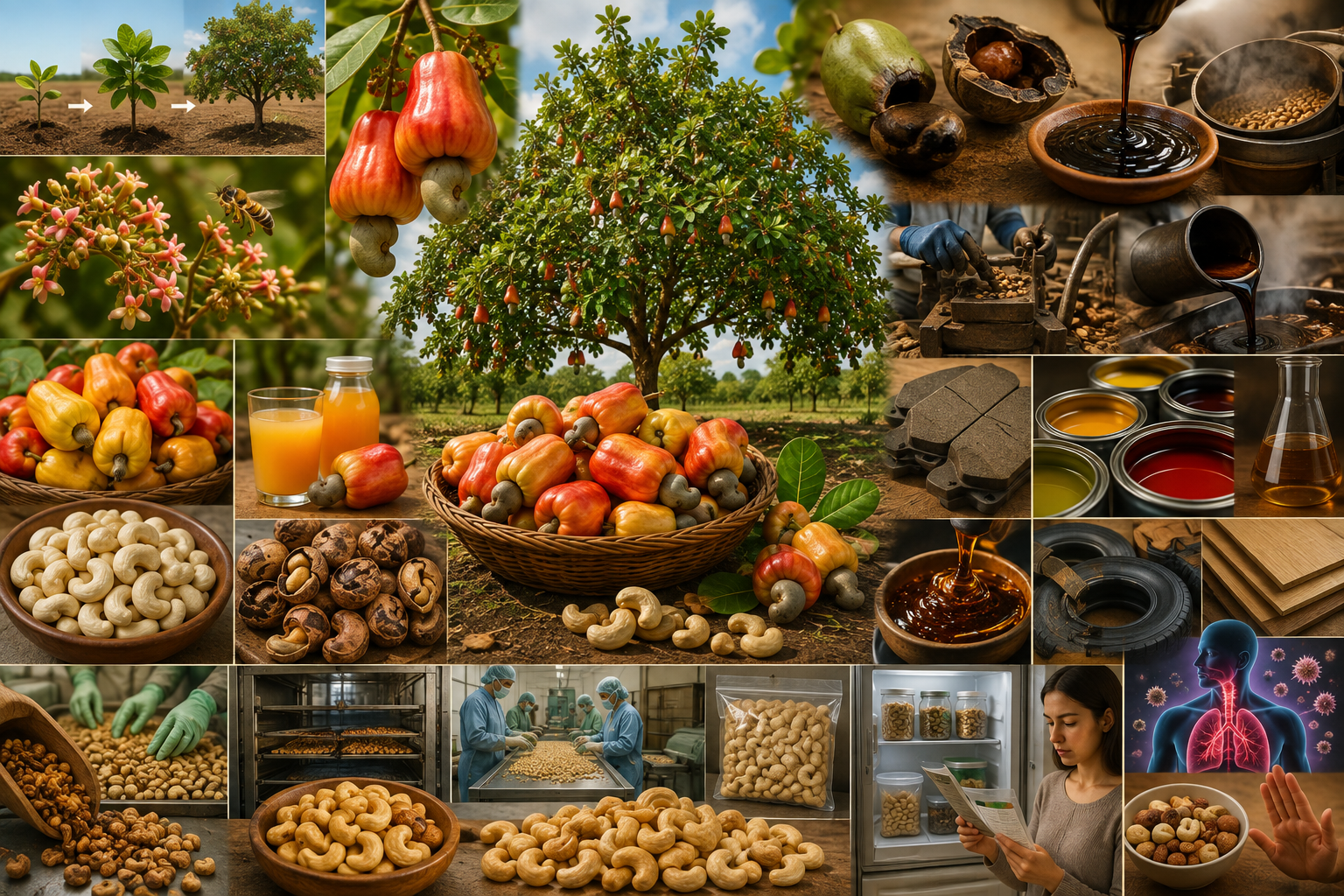
    Cashews are one of the most popular dry fruits in India, but the food we casually eat hides some surprisingly unusual facts. From the strange structure of the cashew fruit to the dangerous liquid inside its shell, cashews have a story that goes far beyond their taste.

    1. How Early Do Grafted Cashew Trees Start Producing Commercial Nuts?

    A cashew tree can begin producing nuts as early as its third year after planting. According to the Food and Agriculture Organization (FAO), full yields are generally reached around eight to ten years after planting. FAO

    2. Are Raw Cashews Poisonous? (The Dangerous Urushiol Toxin in Shells)

    Between the outer shell and the edible kernel is cashew nut shell liquid (CNSL), a chemical-rich substance containing phenolic compounds. It is corrosive and can cause skin irritation, which is why cashew processing requires careful handling. FAO

    3. Is a Cashew a Nut or a Seed? (The True Anatomy of Cashew Drupes)

    The part we call a cashew nut is botanically the seed. It develops beneath the fleshy structure commonly called the cashew apple. Inside the seed is the edible kernel that we normally eat. FAO and ICAR

    4. How Is Cashew Nut Shell Liquid (CNSL) Used in Car Brake Linings?

    The liquid obtained from cashew shells is not simply agricultural waste. CSIR-NIIST documents CNSL applications in friction linings, while FAO specifically identifies cashew shell liquid as a raw material for brake-lining compounds. CSIR-NIIST and FAO

    5. Why Does the Juicy Cashew Apple Spoil Within 24 Hours of Harvest?

    The fleshy cashew apple deteriorates quickly after harvesting, which makes long-distance transportation and storage difficult. This is one reason consumers in places far from major cashew-growing regions rarely encounter fresh cashew apples. FAO

    6. How Much Vitamin C Is Naturally Packed Inside Fresh Cashew Apples?

    FAO material reports about 240 milligrams of vitamin C per 100 grams of cashew apple, compared with about 45 milligrams in the citrus examples cited there. Actual values can vary with variety and growing conditions. FAO

    7. Which Bees and Pollinators Are Essential for Commercial Cashew Fruit Set?

    Cashew flowers depend on pollinating insects. Research from India has identified bees, including the giant honey bee Apis dorsata, as important cashew pollinators, linking pollinator activity with fruit and nut production. Research study

    8. Can You Eat Fresh Cashews Right Off the Tree? (Why Raw Nuts Must Be Steamed)

    A freshly harvested cashew still inside its shell is not equivalent to the shelled cashew sold in shops. The shell contains irritating and corrosive substances that must be dealt with during processing. Industrial processing uses controlled treatment before the edible kernel is separated. USDA Agricultural Research Service

    9. Can You Eat the Cashew Apple Fruit? (Underutilized Culinary Potential)

    The cashew apple is not merely a discarded part of the plant. It can be processed into products such as juice and pulp. ICAR has been actively developing technologies and training programmes for cashew-apple processing and value addition to reduce post-harvest losses. ICAR

    10. Why Does Commercial Cashew Processing Require Skilled Manual Labor?

    Cashew harvesting involves collecting mature nuts, often after they have fallen naturally to the ground, followed by drying and further processing. Traditional harvesting and processing therefore require substantial human labour. FAO

    11. How Can Cashew Trees Thrive in Drought and Nutrient-Poor Coastal Soils?

    Cashew is a relatively hardy tropical crop. FAO describes it as tolerant of drought and poor soil, although adequate moisture and good management are still important when the goal is high commercial production. FAO

    12. Why Does India Import Raw Cashews Despite Being a Top Global Exporter?

    India has a large cashew-processing industry, but domestic production has not always been sufficient to meet the industry’s demand for raw cashew nuts. ICAR has highlighted India’s dependence on imported raw cashews and the need to increase domestic production. ICAR

    13. Why Are Commercial Cashew Orchards Grown From Grafted Clones?

    Because cashew is cross-pollinated, seedlings can differ in yield, nut size, fruit characteristics and other traits. ICAR therefore recommends vegetative propagation, including softwood grafting, to produce genetically uniform plants with earlier and more predictable fruiting. ICAR

    14. Does Storing Roasted Cashews in the Fridge Prevent Rancidity?

    Cashew kernels contain considerable fat, so storage conditions matter. FAO recommends suitable airtight packaging and reports that properly stored processed cashews can remain stable for extended periods, with refrigeration useful for longer-term preservation. FAO

    15. Why Are Cashews One of the Richest Dietary Sources of Copper and Zinc?

    According to the U.S. National Institutes of Health, one ounce, approximately 28 grams, of dry-roasted cashews provides about 629 micrograms of copper, equivalent to approximately 70% of the Daily Value used in the U.S. nutrition system. NIH Office of Dietary Supplements

    16. Why Are Store-Bought “Raw Cashews” Not Truly Raw? (Steam Treatment Truth)

    The word “raw” on commercially sold cashews can be misleading. USDA food-composition documentation explains that cashews marketed as raw have already undergone heat treatment to safely remove the kernel from the shell; they simply have not been additionally roasted for flavour. USDA Agricultural Research Service

    17. How Are Cashew Shell Chemicals Used in Anti-Corrosion Paints and Resins?

    CNSL and its derivatives are used as renewable industrial raw materials. CSIR-NIIST lists applications including friction linings, paints, varnishes, laminating resins, rubber-compounding resins, polyurethane polymers and epoxy resins. CSIR-NIIST

    18. Why Are Cashew Allergies Often More Severe Than Peanut Allergies?

    Cashew is a recognized food allergen, and allergic reactions can be severe in some people. USDA Agricultural Research Service research has identified several cashew allergens and has investigated how processing affects their properties. People with a known cashew allergy should avoid cashews and carefully check packaged-food ingredients and allergen information. USDA Agricultural Research Service

    Why these facts matter

    Cashews are much more than a popular dry fruit. Their unusual fruit structure, hazardous shell liquid, complex processing, nutritional composition, agricultural requirements and industrial applications make them one of the more fascinating food crops. The next time you eat a handful of cashews, remember that the edible kernel is only one small part of a much more complicated biological and industrial story.

    Important note

    The information in this article is provided for educational purposes. Nutrition and food-safety information can depend on the product, preparation method and individual circumstances. For allergies, dietary restrictions or other health-related decisions, consult an appropriate qualified professional and verify information with authoritative sources.

    Official Sources

    Food and Agriculture Organization (FAO) — Cashew Nut

    Indian Council of Agricultural Research (ICAR)

    USDA Agricultural Research Service

    U.S. National Institutes of Health — Office of Dietary Supplements

    CSIR — National Institute for Interdisciplinary Science and Technology

    Frequently Asked Questions

    People Also Ask About are raw cashews poisonous

    Direct, science-backed answers to the most common search questions.

    Are raw cashews poisonous to eat?

    True raw cashews straight from the tree are surrounded by a double shell containing urushiol—the exact same toxic chemical found in poison ivy. Touching or biting raw cashew shells causes severe blistering chemical burns. All commercial cashews are roasted or steamed to eliminate urushiol.

    Where do cashews grow on the plant?

    Unlike other nuts that grow inside a fruit, the cashew seed grows outside, dangling from the bottom of an enlarged, colorful pseudofruit called a cashew apple. Botanically, the kidney-shaped shell hanging at the bottom is the true fruit (a drupe).

    Can you eat the fruit attached to the cashew?

    Yes! The cashew apple is sweet, juicy, and contains up to five times more vitamin C than an orange. However, its delicate thin skin bruises easily and ferments within 24 hours of harvest, making long-distance transport nearly impossible.

    Why are cashews sold without shells?

    Because the honeycomb layer inside the shell is saturated with caustic anacardic acids and cardol. Cashews must be mechanically heat-treated and shelled by trained workers before they are safe for consumers to touch or eat.

    🎬 Watch The Video Story

    Prefer Visual Learning? Watch Deepak Explains It

    Deepak Kumar decodes nature’s greatest mysteries, botany, and everyday science into viral 60-second animated video reels and Shorts. Follow across YouTube, Facebook, and Instagram:

    Interactive Knowledge Check

    Cashew Botany Challenge

    Test what you just learned from this article. Tap the correct answer!
  • Is a Tomato a Fruit or Vegetable? 18 Science-Backed Tomato Secrets

    💡 Did You Know? Science Secret

    Did you know cooking tomatoes actually makes them healthier to absorb?

    Tomatoes are one of the most familiar foods in the world, but behind this ordinary-looking fruit is a fascinating story involving botany, chemistry, plant defense, nutrition, agriculture, space research and food history.

    Here are 18 scientifically verified facts about tomatoes that reveal just how remarkable this everyday food really is.

    1. Is a Tomato Scientifically a Fruit or a Vegetable? (Botanical Berry Truth)

    We commonly call tomatoes vegetables because they are used in savory dishes. Botanically, however, a tomato develops from the flower’s ovary and contains seeds, so it is classified as a fruit. Botanically, the tomato is specifically a berry.

    Official source: Royal Botanic Gardens, Kew

    2. Where Did Wild Tomatoes Originally Originate Before Conquering Global Cuisine?

    The wild relatives of cultivated tomatoes are native to western South America, particularly areas stretching from Ecuador toward northern Chile and the Galápagos region. Tomato domestication has a more complicated history, with scientific evidence supporting important roles for both South America and Mexico.

    Official source: USDA Agricultural Research Service

    3. Why Did Europeans Once Believe Tomatoes Were Deadly “Poison Apples”?

    When tomatoes reached Europe, they were initially grown by some people as ornamental plants and were regarded with suspicion. Their membership in the nightshade family contributed to concerns about their safety.

    Official source: Royal Botanic Gardens, Kew

    4. Are Tomatoes in the Nightshade Family of Plants (Solanaceae)?

    Tomatoes belong to the plant family Solanaceae, commonly called the nightshade family. Their relatives include potatoes, eggplants and peppers. This relationship can be seen in similarities in their flowers, plant chemistry and genetics.

    Official source: Royal Botanic Gardens, Kew

    5. Why Do Tomatoes Naturally Come in Yellow, Purple, Green, and Black Colors?

    Red may be the color most people associate with tomatoes, but cultivated tomatoes can also be yellow, orange, green, purple and other colors. Differences in pigments and genetics influence the final appearance of the fruit.

    Official source: Royal Botanic Gardens, Kew

    6. What Chemical Gives Ripe Tomatoes Their Vibrant Red Color? (Lycopene)

    One of the major pigments responsible for the characteristic red color of ripe tomatoes is lycopene, a carotenoid compound. Lycopene is also an important subject of nutritional and food-science research because of its antioxidant properties.

    Official source: USDA Agricultural Research Service

    7. Why Are Cooked Tomatoes Healthier Than Raw Tomatoes? (Lycopene Absorption)

    Heat and food processing can alter the structure of tomato tissues and lycopene. Research has found that processed or cooked tomato products can provide lycopene in a form that is more bioavailable than lycopene from some raw preparations. This does not mean that raw tomatoes are unhealthy; rather, different preparation methods can affect nutrient availability.

    Official source: USDA Agricultural Research Service

    8. What Percentage of a Fresh Ripe Tomato Is Actually Pure Water?

    Tomatoes have a very high water content, which contributes to their juicy texture and relatively low energy density. Their nutritional composition also includes vitamins, minerals, fiber and naturally occurring plant compounds.

    Official source: USDA Agricultural Research Service

    9. How Do Tomato Plants Defend Themselves Against Insect Attacks?

    When tomato leaves are attacked by herbivorous insects, the plant can release volatile organic compounds into the surrounding air. These chemical signals can influence interactions with other organisms, including parasitoid insects that attack the plant-eating pests.

    This is an example of how a plant can chemically respond to an attack rather than simply remaining passive.

    Official research source: University of South Carolina

    10. Are Tomato Leaves and Stems Poisonous to Humans? (Tomatine Alkaloids)

    Tomato plants naturally produce glycoalkaloids such as alpha-tomatine. Concentrations are generally much higher in leaves and stems and in immature green fruit than in ripe red tomatoes, where levels decline substantially during ripening.

    This is one reason tomato leaves and stems are not normally treated as food, even though ripe tomatoes are commonly eaten.

    Official research source: University of California, Davis

    11. Tomato Plants Can Produce Large Numbers of Fruits

    Under suitable growing conditions, tomato plants can continue producing flowers and fruit throughout the growing season. The actual number depends heavily on the cultivar, growing environment, pruning, pollination, nutrition and disease pressure.

    Official source: University of Minnesota Extension

    12. Can Green Tomatoes Continue to Ripen on Your Kitchen Counter?

    Many tomatoes can continue to ripen after harvest if they have reached the appropriate stage of physiological maturity. During ripening, the fruit changes color, texture and flavor. Properly mature green tomatoes can ripen indoors under suitable conditions.

    Official source: University of Minnesota Extension

    13. How Does Ethylene Gas Control the Speed of Commercial Tomato Ripening?

    Ethylene is a plant hormone that plays a major role in the ripening process of climacteric fruits, including tomatoes. Changes associated with ripening include color development, softening and changes in flavor and aroma.

    Official source: University of Minnesota Extension

    14. Can Tomatoes Get Sunburned on the Vine? (The Science of Sunscald)

    Tomatoes can suffer from a condition called sunscald when fruit tissue is exposed to excessive direct sunlight. The affected area can become tan or white and may eventually dry and become wrinkled. Healthy foliage can help protect developing fruit from intense sunlight.

    Official source: University of Minnesota Extension

    15. Why Are NASA Scientists Growing Tomatoes for Deep Space Colonies?

    Tomatoes are not just an Earth crop. NASA and its partners have studied tomato production in controlled space environments because growing fresh food could become important during future long-duration missions.

    NASA’s space-crop research includes experiments involving dwarf tomatoes and studies of plant growth, nutrition, microbial food safety and other factors relevant to growing food in space.

    Official source: NASA Science

    16. What Happened When Tomato Seeds Were Germinated in Zero Gravity?

    NASA has conducted experiments involving tomato plants grown from seeds exposed to simulated space radiation. Researchers have examined plant growth and nutritional characteristics to better understand whether nutritious crops can be reliably produced for future space missions.

    Official source: NASA

    17. Which Country Produces the Most Tomatoes in the World Today?

    Tomatoes are cultivated on a massive scale worldwide, and China has historically been the world’s largest tomato-producing country. FAO production statistics show China’s tomato production at a much larger scale than that of most other individual countries.

    Official source: Food and Agriculture Organization of the United Nations (FAO)

    18. Did Tomato Ketchup Originally Start as an Ancient Fermented Fish Sauce?

    The history behind the word and concept of ketchup predates the modern tomato-based condiment. Earlier forms of ketchup were associated with fermented sauces, including fish-based preparations in Asia. Over time, the condiment evolved through different cultures and recipes before tomato ketchup became the familiar version used today.

    It is therefore more accurate to say that modern tomato ketchup is the result of a long culinary evolution rather than an invention that began with the tomato itself.

    Historical source: Encyclopaedia Britannica

    Why Tomatoes Are Scientifically Fascinating

    A tomato may look like an ordinary kitchen ingredient, but its biology tells a much bigger story. It is botanically a berry, evolved from wild relatives in South America, contains specialized pigments and defensive chemicals, responds chemically to insect attacks, continues biological changes after harvest, and has even become part of research into growing food beyond Earth.

    That combination of everyday familiarity and sophisticated biology makes the tomato a perfect example of how much science can be hidden inside an ordinary food.

    Sources and Further Reading

    Editorial note: This article is intended for educational purposes. Scientific understanding and agricultural statistics can change as new research and updated datasets become available.

    Frequently Asked Questions

    People Also Ask About is a tomato a fruit or vegetable

    Direct, science-backed answers to the most common search questions.

    Is a tomato scientifically a fruit or a vegetable?

    Botanically, a tomato is a true fruit—specifically a fleshy berry—because it develops from the ovary of the flower and encloses internal seeds. In cooking and taxation, it is commonly called a culinary vegetable due to its savory flavor profile.

    Why shouldn’t you keep tomatoes in the refrigerator?

    Temperatures below 12°C (54°F) shut down the volatile aroma-producing enzymes in tomatoes and break down cell membranes, resulting in a permanent loss of sweetness and a mealy, watery texture.

    Are cooked tomatoes healthier than raw tomatoes?

    Yes, for antioxidant absorption. Heating tomatoes breaks open rigid plant cell walls and converts trans-lycopene into cis-lycopene, making this potent heart-healthy antioxidant significantly easier for the human digestive tract to absorb.

    Are tomato leaves and green stems poisonous?

    Tomato greenery contains glycoalkaloids called tomatine and solanine as a chemical pest defense. While small garnish amounts are harmless, eating large quantities of tomato foliage can cause digestive irritation.

    🎬 Watch The Video Story

    Prefer Visual Learning? Watch Deepak Explains It

    Deepak Kumar decodes nature’s greatest mysteries, botany, and everyday science into viral 60-second animated video reels and Shorts. Follow across YouTube, Facebook, and Instagram:

    Interactive Knowledge Check

    Tomato Science Quiz

    Test what you just learned from this article. Tap the correct answer!
  • Why Do Onions Make You Cry? 18 Science-Backed Onion Facts Explained

    Why Do Onions Make You Cry? 18 Science-Backed Onion Facts Explained

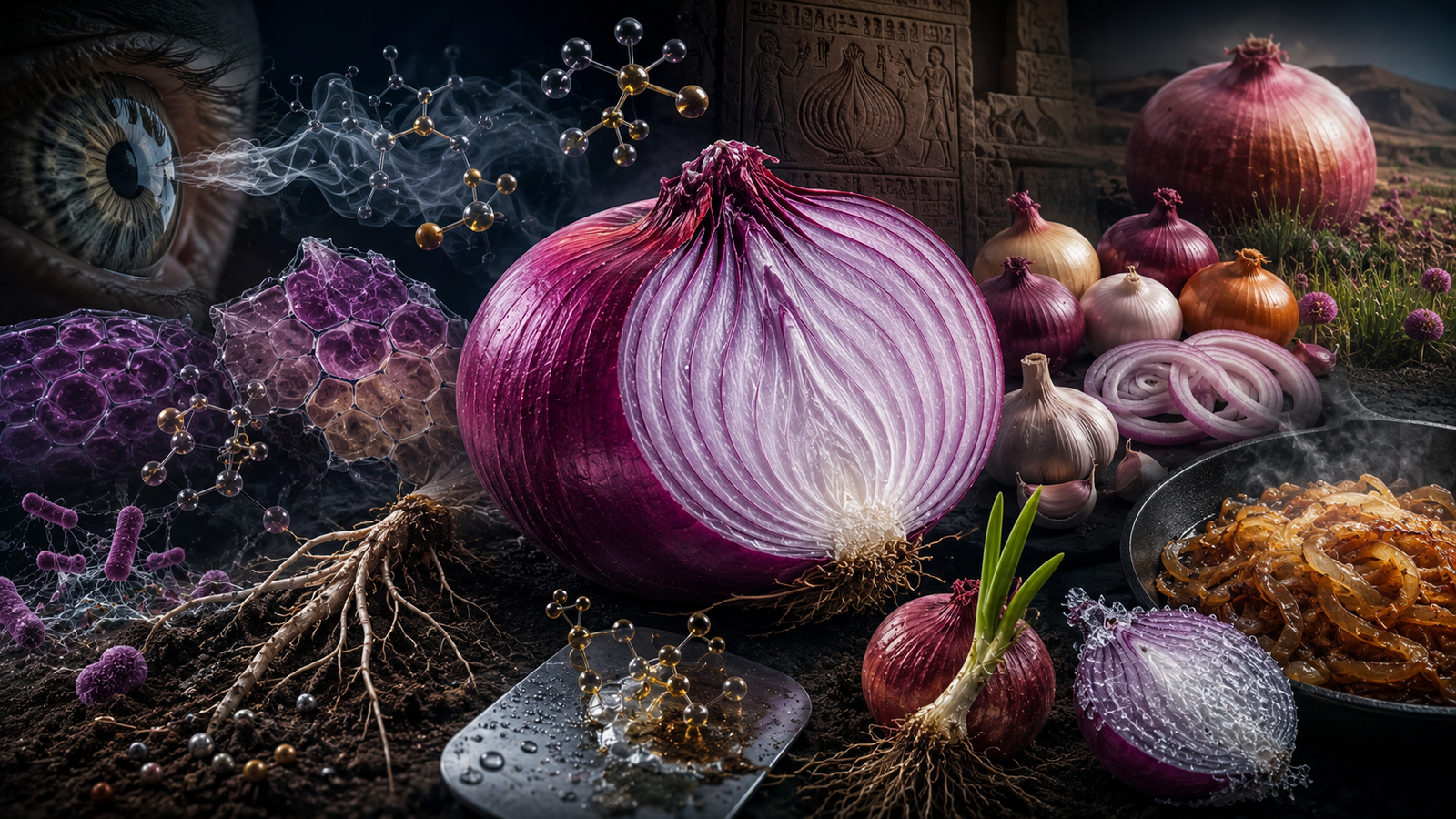
    Discover 18 surprising facts about onions-from the science behind your tears and their hidden chemical defenses to their unusual growth, pigments, cooking chemistry, historical significance, and remarkable abilities. Explore the fascinating biology and chemistry hidden inside this everyday vegetable.

    💡 Did You Know? Science Secret

    Did you know that botanically, an onion is NOT a root?

    1. Why Do Onions Make You Cry? (The Chemistry of Syn-Propanethial-S-Oxide)

    Cutting an onion triggers a remarkable chemical defense system. When its cells are damaged, enzymes act on sulfur-containing compounds and ultimately produce a volatile irritant called syn-propanethial-S-oxide. This compound reaches your eyes and contributes to irritation that triggers more tears. In other words, the onion is activating a chemical defense system that makes your eyes respond.

    The surprising part: Your tears are actually part of your eyes’ natural defense response to the onion’s chemistry.

    Source: An onion enzyme that makes the eyes water – Nature

    2. Is an Onion a Root or a Stem? (How It Functions as a Plant Battery)

    An onion bulb is essentially a food-storage organ for the plant. It stores carbohydrates and other nutrients that provide energy when the plant needs to survive unfavorable conditions and later produce new growth. When an onion begins sprouting, the developing leaves use these stored resources to grow-even before the plant has established a large photosynthetic leaf system. What looks like an ordinary kitchen vegetable is actually a compact biological survival package.

    The surprising part: The onion you eat is storing energy for the plant’s future growth.

    Source: Physiological, biochemical and transcriptional analysis of onion bulbs during storage – Plant Physiology

    3. What Chemical Weapons Do Onions Use to Defend Against Herbivores?

    An onion has a sophisticated chemical defense system that activates when its tissues are damaged. Cutting or chewing the bulb allows enzymes and sulfur-containing compounds to interact, producing pungent chemicals that can discourage insects, microbes, and animals from feeding on the plant. These compounds are part of the onion’s natural defense strategy, helping protect its tissues from biological threats.

    The surprising part: That strong onion smell and sharp taste are partly the result of a built-in chemical defense system.

    Source: An Appraisal of Developments in Allium Sulfur Chemistry – Molecules

    4. Are Onion Rings Actually Leaves? (Botanical Anatomy Explained)

    Those concentric rings aren’t just decorative layers. An onion bulb is made largely from thickened leaf bases packed tightly around a very short stem. These fleshy leaf bases store nutrients that the plant can later use for growth. So when you cut an onion and see its familiar rings, you’re actually looking at layers of modified leaves arranged around the plant’s growing point.

    The surprising part: The onion bulb is not a root-it is mainly a compact storage structure built from modified leaves.

    Source: Physiological, biochemical and transcriptional analysis of onion bulbs during storage – Plant Physiology

    5. Can Onions Absorb Heavy Metals and Toxins From Contaminated Soil?

    Onion plants can absorb certain heavy metals, including elements such as cadmium and lead, from contaminated soil and accumulate some of them in their tissues. This characteristic has made Allium cepa useful in research involving environmental pollution and biological monitoring. But it also highlights why growing edible crops in contaminated soil can create a food-safety concern.

    The surprising part: An onion plant can respond to and accumulate pollutants from the soil-but that does not make contaminated crops safe to eat.

    Source: Certain antioxidant enzymes of Allium cepa as biomarkers for the detection of toxic heavy metals in wastewater – PubMed

    6. Why Are Red and Purple Onions Richer in Cell-Protecting Anthocyanins?

    Purple onions get much of their deep red-purple color from anthocyanins, a group of plant pigments with antioxidant activity. These compounds help plants respond to environmental stress and can contribute to the onion’s antioxidant properties. Their concentration can vary with onion variety and growing conditions, which is one reason purple onions can differ noticeably in color intensity.

    The surprising part: The vivid purple color isn’t just decoration-it comes from biologically active pigments produced by the plant.

    Source: Onion anthocyanins: Extraction, stability, bioavailability, dietary effect, and health implications – PMC

    7. Why Do Cut Onions Smell Stronger Over Time? (Allicin & Sulfur Reactions)

    An intact onion keeps many of its enzymes and sulfur-containing molecules separated inside different parts of its cells. Cutting destroys those cellular compartments, allowing the chemicals to mix and triggering rapid enzymatic reactions that produce volatile sulfur compounds. These compounds escape into the air, making the freshly cut onion smell much stronger than an intact one.

    The surprising part: Cutting an onion doesn’t simply release its smell-it triggers chemical reactions that produce many of the volatile compounds responsible for that smell.

    Source: Investigation of Volatiles Emitted from Freshly Cut Onions – PMC

    8. Why Did Ancient Egyptians Worship and Bury Pharaohs With Onions?

    Onions were an important part of ancient Egyptian life, appearing in food, art, and funerary contexts. Archaeological evidence shows onions among food offerings and depictions associated with ancient Egyptian tombs. Their distinctive layered structure may also have contributed to later interpretations of symbolic meaning, although the specific symbolism should not be treated as universally established.

    The surprising part: Thousands of years ago, this ordinary vegetable was important enough to appear in ancient Egyptian funerary and artistic contexts.

    Source: Ancient Egyptian tomb relief featuring onions – Smithsonian Institution

    9. Are Onions and Garlic Botanically Related? (The Allium Genus)

    Onions and garlic belong to the same plant genus, Allium, which also includes leeks, shallots, and chives. Their characteristic pungent aromas and flavors come largely from sulfur-containing compounds that are produced when their cells are damaged. So the distinctive smell of both onion and garlic comes from related chemical systems inherited from close botanical relatives.

    The surprising part: Onions and garlic may taste different, but much of their characteristic chemistry comes from the same botanical family.

    Source: The analysis of onion and garlic – PubMed

    10. Why Are Vidalia and Sweet Onions Less Pungent Than Yellow Onions?

    Onion flavor depends on a balance between sugars and pungent sulfur compounds. Variety, growing conditions, soil, temperature, and maturity can all influence this chemistry. Onions with more sugars and fewer pungent sulfur compounds generally taste milder and sweeter, while others produce a much sharper bite.

    The surprising part: An onion’s sweetness isn’t determined by sugar alone-the balance between sugars and sulfur compounds shapes its overall flavor.

    Source: Characterization of Shortday Onion Cultivars of 3 Pungency Levels – PubMed

    11. Can Raw Onion Juice Really Inhibit Harmful Bacteria?

    Laboratory studies have found that certain onion extracts and their sulfur-containing compounds can inhibit the growth of some bacteria. However, these findings do not mean that eating onions can treat bacterial infections. Antimicrobial activity observed in laboratory experiments is different from a proven medical treatment in humans.

    The surprising part: Onion compounds can show antimicrobial effects in the laboratory, but onions are not a substitute for antibiotics or medical treatment.

    Source: In vitro antibacterial activity of onion against clinical isolates of Vibrio cholerae – PubMed

    12. Why Does Chilling Onions in the Fridge Prevent Crying When Cutting?

    Chilling an onion before cutting it is commonly reported to reduce tearing because lower temperatures can slow the enzyme-driven reactions involved in producing volatile irritating compounds. Cooling does not stop the chemistry completely, and the size of the effect can depend on the onion and cutting conditions.

    The surprising part: A simple chill may slow some of the onion’s tear-producing chemistry before you start cutting it.

    Source: Why Onions Make You Cry – Serious Eats

    13. What Is the Heaviest Onion Ever Grown in World History?

    Some onions can grow to astonishing sizes under carefully controlled growing conditions. The current Guinness World Records record is 8.97 kilograms, achieved by Gareth Griffin in the United Kingdom in 2023. Reaching such enormous size depends on genetics, variety, growing conditions, nutrition, water supply, and a long growing period.

    The surprising part: A single onion can grow to a weight greater than a typical bowling ball.

    Source: Heaviest onion – Guinness World Records

    14. Why Do Cooked Onions Taste Sweet Without Added Sugar? (Caramelization)

    Cooking transforms an onion’s flavor through heat-driven chemical reactions. As the onion heats, some pungent sulfur compounds break down or are lost, reducing its sharp bite. At the same time, water is lost and naturally occurring sugars become more concentrated; with sufficient heat, browning reactions create additional complex flavors, producing the characteristic sweet, rich taste of cooked onions.

    The surprising part: Cooking doesn’t simply make onions sweeter-it changes their chemistry, reducing pungency while creating a much richer flavor.

    Source: Change in organosulfur compounds in onion during heat treatment – PMC

    15. How Did Wild Onions Help Early Humans Survive Prehistoric Foraging?

    Wild onions and other edible Allium plants have been gathered and eaten by people for thousands of years. Their edible bulbs, leaves, and flowers provided nutrients and distinctive flavors in traditional diets. Archaeological evidence from North America shows that wild onion bulbs were gathered and consumed by prehistoric communities.

    The surprising part: Long before modern agriculture, wild relatives of today’s onions could provide people with an accessible source of edible plant food.

    Source: Wild Onion – Texas Beyond History

    16. Why Do Onions Sprout Green Shoots in Your Kitchen Pantry?

    An onion bulb is still a living plant structure after harvest. When it encounters suitable moisture, temperature, and other environmental conditions, its dormant growing tissues can become active and send out new green shoots and roots. The developing sprout initially relies heavily on nutrients stored inside the bulb to support this new growth.

    The surprising part: A sprouting onion isn’t simply spoiling-it is a living plant waking up and using its stored food to grow again.

    Source: Physiological, biochemical and transcriptional analysis of onion bulbs during storage – PMC

    17. Why Do Sulfur Compounds in Onions Turn Silver Spoons Black?

    Onions contain sulfur-containing compounds, and sulfur chemistry is also responsible for the familiar dark tarnishing of silver. When silver reacts with sulfur-containing compounds or gases under suitable conditions, it can form silver sulfide, a dark compound that appears as black tarnish on the metal’s surface. The chemistry is well established, although the extent to which an ordinary onion directly tarnishes silver depends on the conditions.

    The surprising part: The sulfur chemistry associated with pungent substances can contribute to the black tarnishing of silver.

    Source: Silver to Black – Journal of Chemical Education

    18. Are Onions Roots or Leaves? (The Final Botanical Secret)

    An onion bulb is mainly a swollen storage structure formed from the thickened bases of modified leaves surrounding a very short stem. These fleshy layers store carbohydrates and other nutrients that fuel future growth. The roots grow from the basal plate underneath the bulb, which is why the onion you eat is botanically very different from a root such as a carrot or radish.

    The surprising part: The onion bulb isn’t a root at all-it’s a tightly packed storage structure made largely from modified leaves.

    Source: Physiological, biochemical and transcriptional analysis of onion bulbs during storage – PMC


    Conclusion

    An onion may look like one of the simplest vegetables in your kitchen, but its biology tells a very different story. Its layers store energy, its cells manufacture defensive chemicals, its pigments create vivid colors, its chemistry changes when cut or cooked, and its bulb can remain alive long after harvest. The next time you cut an onion, you’re not just preparing food-you are interacting with a remarkably sophisticated plant structure.

    Frequently Asked Questions

    People Also Ask About why do onions make you cry

    Direct, science-backed answers to the most common search questions.

    Why do onions make you cry?

    When sliced, onion cell walls break, releasing alliinase enzymes that convert amino acid sulfoxides into syn-propanethial-S-oxide. This volatile sulfur gas reaches your eyes and reacts with the corneal moisture, stimulating the lachrymal glands to flush out tears.

    How can you cut onions without crying?

    Chilling onions in the refrigerator for 30 minutes before slicing slows down the enzymatic reaction. Using a razor-sharp knife reduces cell damage, releasing far less gas than a dull blade.

    Is an onion a root or a leaf?

    Botanically, an onion bulb is composed of modified fleshy underground leaves (scales) attached to a compressed stem plate. The true roots are only the thin fibers growing out from the bottom base.

    Can cut onions absorb bacteria or toxins from a room?

    No, this is an old myth. Cut onions do not act as magnets for airborne bacteria or viruses. While onions contain antibacterial sulfur compounds, they should be refrigerated in airtight containers like any fresh cut produce.

    🎬 Watch The Video Story

    Prefer Visual Learning? Watch Deepak Explains It

    Deepak Kumar decodes nature’s greatest mysteries, botany, and everyday science into viral 60-second animated video reels and Shorts. Follow across YouTube, Facebook, and Instagram:

    Interactive Knowledge Check

    Onion Science Challenge

    Test what you just learned from this article. Tap the correct answer!