Tag: Biology

  • बारिश के मौसम में छिपी जीव-जगत की दुनिया: 100+ छोटे जीवों और उनके रहस्यों की वैज्ञानिक कहानी

    बारिश के मौसम में छिपी जीव-जगत की दुनिया: 100+ छोटे जीवों और उनके रहस्यों की वैज्ञानिक कहानी

    💡 Did You Know? Science Secret

    Why do winged termites and ants take flight right after heavy monsoon rain?
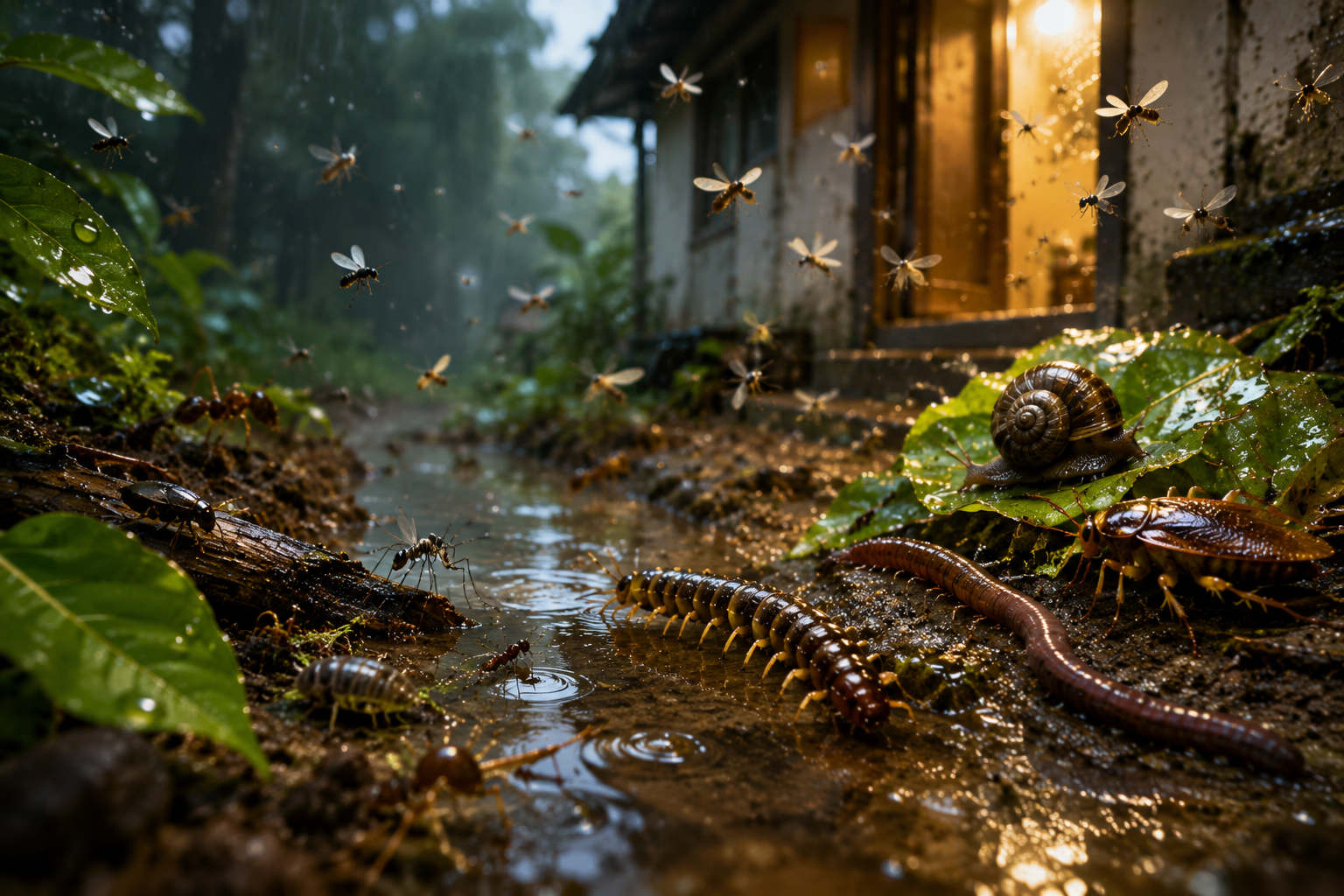
    बारिश के बाद हमारे आसपास दिखाई देने वाले छोटे जीवों की दुनिया सिर्फ “कीड़ों” की दुनिया नहीं है। इसमें insects, arachnids, crustaceans, annelids, molluscs और दूसरे जीव शामिल होते हैं। नीचे इस documentary में शामिल प्रमुख facts को संक्षेप में, वैज्ञानिक संदर्भों के साथ समझाया गया है।

    CHAPTER 1 — बारिश के बाद अचानक इतने जीव आते कहाँ से हैं?

    Clip 1 — The transformation

    बारिश इन जीवों को जादुई रूप से पैदा नहीं करती। वह moisture, temperature, temporary water और habitat conditions बदलती है, जिससे पहले से मौजूद organisms अधिक active या visible हो सकते हैं। U.S. Environmental Protection Agency

    Clip 2 — Underground world

    हमारे पैरों के नीचे soil और leaf litter में earthworms, ants, beetles, larvae और microorganisms जैसी विशाल hidden communities रहती हैं। Surface पर दिखने वाली life इस underground biodiversity का केवल एक हिस्सा है। University of Minnesota Extension

    Clip 3 — Soil becomes alive

    Moisture soil organisms के movement और feeding के लिए महत्वपूर्ण है। Adequate moisture और favorable environmental conditions कई soil organisms और microorganisms की activity को बढ़ा सकती हैं, हालांकि हर species की response अलग होती है। University of Minnesota Extension

    Clip 4 — Temporary water

    बारिश के बाद छोटे puddles temporary freshwater habitats बन सकते हैं। उपयुक्त conditions में mosquitoes और दूसरे aquatic organisms इनके पानी का उपयोग अपने life cycle के अलग-अलग stages के लिए कर सकते हैं। U.S. Environmental Protection Agency

    Clip 5 — Plants explode with activity

    बारिश के बाद उपलब्ध water plants की growth और physiological activity को support कर सकता है। पौधों पर उपलब्ध fresh plant tissue और sap कई herbivorous insects के लिए food resources बन सकते हैं। University of Minnesota Extension

    Clip 6 — Underground homes get flooded

    Heavy rainfall soil और underground shelters में water conditions बदल सकती है। कुछ animals flooded या unsuitable shelters छोड़कर नए स्थान खोज सकते हैं, हालांकि यह response species और flooding intensity पर निर्भर करता है। University of Minnesota Extension

    Clip 7 — Night lights

    कई nocturnal insects artificial light की ओर आकर्षित या disoriented हो सकते हैं, इसलिए monsoon nights में household bulbs के आसपास moths और दूसरे flying insects अधिक conspicuous दिखाई दे सकते हैं। National Park Service

    Clip 8 — The big reveal

    बारिश के बाद दिखाई देने वाले termite, mosquito, earthworm, snail, millipede और spider एक ही category के जीव नहीं हैं। कुछ insects हैं, जबकि earthworm annelid, snail mollusc, millipede myriapod और spider arachnid है। Smithsonian National Museum of Natural History

    CHAPTER 2 — आसमान में उड़ने वाले छोटे कीड़े

    Clip 9 — Flying termites

    Winged termites reproductive individuals होते हैं जो suitable conditions में colony से निकलकर dispersal और mating के लिए उड़ते हैं। कुछ termite swarms brief rain के बाद भी देखे जा सकते हैं। Penn State Extension

    Clip 10 — Termite swarm

    Termite swarm में बड़ी संख्या में winged reproductives एक साथ दिखाई दे सकते हैं। Winged termites artificial light की ओर आकर्षित हो सकते हैं, इसलिए घर की lights के आसपास उनका जमावड़ा बहुत conspicuous दिखाई देता है। Penn State Extension

    Clip 11 — Why termites fly

    Winged termites mature colonies के reproductive caste का हिस्सा होते हैं। वे colony छोड़कर dispersal और mating करते हैं, और mating के बाद नई colony शुरू करने के लिए suitable moist sites खोज सकते हैं। Penn State Extension

    Clip 12 — Winged ants

    Winged ants भी reproductive males और queens होते हैं जो mating flights के दौरान बड़ी संख्या में swarm कर सकते हैं। Ant species के अनुसार swarming season और timing अलग हो सकती है। University of Minnesota Extension

    Clip 13 — Ant versus termite

    Winged ants और winged termites को अलग करने के लिए waist, antennae और wings उपयोगी clues हैं। Ant में narrow waist और elbowed antennae होते हैं, जबकि termite में broad waist और straight antennae तथा समान लंबाई के wings होते हैं। Penn State Extension

    Clip 14 — Mosquitoes

    Mosquitoes का aquatic life cycle उन्हें temporary standing water से जोड़ता है। Eggs, larvae और pupae पानी में विकसित होते हैं, जबकि adult mosquitoes उड़ते हैं। U.S. Environmental Protection Agency

    Clip 15 — Midges

    Non-biting midges छोटे flying insects हैं जो wetlands और अन्य moist habitats के आसपास बड़ी संख्या में दिखाई दे सकते हैं। कई species के larvae aquatic या moist substrates में विकसित होते हैं। U.S. Environmental Protection Agency

    Clip 16 — Small flies

    छोटी flies की कई groups damp organic matter, decaying material या अन्य moisture-rich habitats से जुड़ी होती हैं। उनकी exact ecology species पर निर्भर करती है, इसलिए हर tiny fly को एक ही प्रकार का fly मानना सही नहीं है। University of Minnesota Extension

    Clip 17 — Moths

    कई nocturnal moths artificial lights की ओर आकर्षित होती हैं या उनके आसपास disoriented हो सकती हैं। इसलिए monsoon nights में घर की lights moth activity को बहुत conspicuous बना सकती हैं। National Park Service

    Clip 18 — Mayflies

    Mayflies freshwater ecosystems से closely associated insects हैं। उनका immature aquatic stage पानी में रहता है और adults अक्सर freshwater के आसपास बड़ी संख्या में emerge कर सकते हैं। National Park Service

    CHAPTER 3 — घर के आसपास दिखाई देने वाले छोटे कीड़े

    Clip 19 — Cockroach emergence

    कुछ cockroach species dark, damp places जैसे drains, sewers और leaky plumbing के आसपास रहना पसंद करती हैं। Excess rainfall या बदलती environmental conditions कुछ species को buildings में अधिक visible बना सकती हैं। University of Minnesota Extension

    Clip 20 — Ant invasion

    Ants food, moisture और shelter की तलाश में घरों में प्रवेश कर सकती हैं। कुछ species moisture-damaged wood या damp areas के पास nest करती हैं, इसलिए बारिश के दौरान indoor ant activity बढ़ सकती है। University of Minnesota Extension

    Clip 21 — Fruit flies

    Fruit flies ripe या fermenting fruit और अन्य moist organic food sources से attract होती हैं। इसलिए गर्म और नम मौसम में overripe fruit को खुला छोड़ने पर उनकी संख्या जल्दी बढ़ सकती है। University of Minnesota Extension

    Clip 22 — Drain flies

    Drain flies या moth flies छोटे fuzzy insects हैं जो sinks, showers और drains में जमा moist organic film में breed कर सकते हैं। वे आम तौर पर nuisance होते हैं और लोगों को bite नहीं करते। University of Minnesota Extension

    Clip 23 — Fungus gnats

    Fungus gnats छोटे dark flies हैं जो continuously wet potting soil में thrive कर सकते हैं। उनके larvae soil में fungi और decaying organic material पर feed करते हैं। University of Minnesota Extension

    Clip 24 — Booklice

    Booklice या psocids tiny soft-bodied insects हैं जो damp, warm और undisturbed places में मिल सकते हैं। वे mold, fungi और starchy material पर feed कर सकते हैं और आम तौर पर लोगों या pets को नुकसान नहीं पहुंचाते। University of Minnesota Extension

    Clip 25 — Moths indoors

    कई moths artificial light की ओर आकर्षित होती हैं, इसलिए रात में घर की lights के आसपास उनका दिखाई देना सामान्य हो सकता है। यह attraction species और light conditions के अनुसार बदलती है। National Park Service

    Clip 26 — Houseflies

    Houseflies garbage, manure और decaying vegetation जैसे organic materials में breed कर सकती हैं। वे nuisance होने के साथ disease-causing bacteria को mechanically transfer करने में सक्षम हो सकती हैं। University of Minnesota Extension

    Clip 27 — Why houses attract them

    घर के आसपास insects के लिए चार बड़े attractors हो सकते हैं: moisture, accessible food, suitable warmth और artificial light। अलग species इन factors को अलग-अलग महत्व देती हैं, इसलिए prevention भी source-specific होना चाहिए। University of Minnesota Extension

    Clip 28 — Prevention concept

    घर में unwanted insects कम करने के लिए standing water हटाना, drains और damp areas को साफ रखना, food को covered रखना और moisture leaks ठीक करना उपयोगी basic steps हैं। U.S. Environmental Protection Agency

    CHAPTER 4 — मकड़ियाँ और दूसरे Arachnids

    Clip 29 — बारिश के बाद मकड़ी का जाला

    बारिश के बाद spider webs पर पानी की बूंदें जमा होकर उनकी महीन silk को बेहद स्पष्ट बना देती हैं। इससे वह जाला दिखाई देने लगता है जो सूखे मौसम में आसानी से नजरअंदाज हो सकता है। Smithsonian Tropical Research Institute

    Clip 30 — बारिश में मकड़ियाँ ज्यादा दिखाई क्यों देती हैं?

    गीली vegetation में spiders और उनके prey दोनों की गतिविधियां बदल सकती हैं, इसलिए बारिश के बाद hunting spiders अधिक आसानी से दिखाई दे सकती हैं। Spider की body plan में आठ legs और दो मुख्य body regions होते हैं। Smithsonian National Museum of Natural History

    Clip 31 — Orb-weaver

    Orb-weaver spiders अपने geometric orb webs के लिए प्रसिद्ध हैं। बारिश की बूंदें इन silk threads पर टिककर पूरे web की संरचना को macro स्तर पर उजागर कर देती हैं। Smithsonian Tropical Research Institute

    Clip 32 — Wolf spider

    Wolf spiders web पर निर्भर रहने के बजाय सक्रिय रूप से जमीन पर prey का पीछा कर सकती हैं। नम leaf litter और soil उनके लिए बारिश के बाद उपयुक्त hunting habitat बन सकते हैं। University of Minnesota Extension

    Clip 33 — Jumping spider

    Jumping spiders अपनी अच्छी vision और छलांग लगाकर prey पकड़ने की क्षमता के लिए जानी जाती हैं। उनकी large front-facing eyes उन्हें अन्य कई spiders से visually अलग बनाती हैं। Smithsonian Tropical Research Institute

    Clip 34 — Huntsman spider

    Huntsman spiders बड़े, तेज चलने वाले spiders हैं जो अक्सर sheltered spaces में छिपते हैं और active predators होते हैं। नम मौसम में वे अपने hiding places से अधिक दिखाई दे सकते हैं। University of Minnesota Extension

    Clip 35 — Mites

    Mites भी arachnids हैं और इतने छोटे हो सकते हैं कि उन्हें देखने के लिए extreme magnification चाहिए। Moist organic material में microscopic arthropod communities का हिस्सा mites भी हो सकते हैं। Smithsonian National Museum of Natural History

    Clip 36 — Ticks

    Ticks arachnids हैं, insects नहीं। वे host की skin से attach होकर blood meal लेते हैं और कुछ species pathogens transmit कर सकती हैं। CDC

    Clip 37 — Harvestman

    Harvestmen आठ-legged arachnids हैं, लेकिन spiders से अलग group हैं। उनके लंबे legs और comparatively compact body उन्हें wet leaves पर आसानी से पहचानने योग्य बनाते हैं। Smithsonian National Museum of Natural History

    Clip 38 — Spider insect नहीं है

    Insects के छह legs और तीन main body regions होते हैं, जबकि spiders आठ-legged arachnids हैं और उनका body plan अलग है। इसलिए हर छोटा crawling animal insect नहीं होता। Smithsonian National Museum of Natural History

    CHAPTER 5 — कनखजूरे और हजारपाँव

    Clip 39 — Centipede emergence

    Centipedes नम leaf litter, stones और bark के नीचे रहने वाले active predators हैं। बारिश के बाद बढ़ी हुई ground moisture उन्हें ऐसे shelters से बाहर movement करते हुए अधिक visible बना सकती है। University of Minnesota Extension

    Clip 40 — Centipedes बारिश में क्यों दिखाई देते हैं?

    Centipedes damp conditions से जुड़े arthropods हैं और सामान्यतः insects तथा दूसरे छोटे arthropods का शिकार करते हैं। बारिश और ground moisture उनके microhabitat को बदल सकती है। University of Minnesota Extension

    Clip 41 — Centipede hunting

    Centipedes शिकारी होते हैं और insects, spiders तथा अन्य छोटे arthropods को पकड़ते हैं। उनकी modified first pair of legs prey capture और venom delivery में काम आती है। University of Minnesota Extension

    Clip 42 — House centipede

    House centipedes नम जगहों में मिल सकते हैं और उनके लंबे, अनेक legs उन्हें तुरंत पहचानने योग्य बनाते हैं। वे छोटे arthropods के predators हैं। University of Minnesota Extension

    Clip 43 — Millipede

    Millipedes आमतौर पर धीमे चलने वाले decomposers हैं जो decaying organic material खाते हैं। अधिकांश trunk segments पर दो pairs of legs उनका प्रमुख anatomical distinction है। University of Minnesota Extension

    Clip 44 — Mass millipede movement

    जब soil और leaf litter नम रहते हैं, millipedes जैसे moisture-dependent detritivores अधिक active दिखाई दे सकते हैं। उनकी सामूहिक movement wet surfaces पर विशेष रूप से striking हो सकती है। University of Minnesota Extension

    Clip 45 — Millipede defense

    कई millipede species disturbance पर शरीर को curl करती हैं और कुछ defensive chemical secretions भी छोड़ सकती हैं। यह behavior species-specific है और इसे हर millipede पर लागू नहीं करना चाहिए। University of Minnesota Extension

    Clip 46 — Pill millipede

    कुछ pill millipedes खतरा महसूस होने पर अपने शरीर को protective ball में बंद कर सकते हैं। यह true pill bugs के enrollment से अलग जीवों में भी मिलने वाला defensive strategy है, इसलिए species की पहचान महत्वपूर्ण है। Smithsonian National Museum of Natural History

    Clip 47 — Centipede बनाम millipede

    Centipedes में सामान्यतः एक pair of legs प्रति trunk segment होता है, जबकि millipedes में अधिकांश trunk segments पर दो pairs होते हैं। यह distinction उन्हें field में अलग करने का सबसे उपयोगी anatomical clue है। Smithsonian National Museum of Natural History

    Clip 48 — Millipedes और nutrient cycling

    Millipedes decaying leaves और दूसरे organic material को खाते हैं और decomposition process में योगदान देते हैं। इस तरह वे dead plant material को छोटे particles में बदलकर nutrient cycling में मदद करते हैं। University of Minnesota Extension

    CHAPTER 6 — केंचुओं की बारिश

    Clip 49 — First earthworm

    बारिश के बाद wet ground पर earthworms अधिक दिखाई दे सकते हैं क्योंकि moisture उनकी movement और surface activity के लिए महत्वपूर्ण है। Earthworms soil ecosystem के प्रमुख organisms हैं। University of Minnesota Extension

    Clip 50 — Underground life

    Earthworms soil के भीतर tunnels बनाते हुए organic material और soil particles के बीच चलते हैं। उनके burrows soil structure और water तथा air movement को प्रभावित कर सकते हैं। University of Minnesota Extension

    Clip 51 — Saturated soil और surface movement

    बहुत अधिक पानी soil के air-filled spaces को कम कर सकता है। ऐसे बदलते conditions कुछ earthworms को surface या अलग soil zones की ओर move करने के लिए प्रेरित कर सकते हैं। University of Minnesota Extension

    Clip 52 — Moisture

    Earthworms की soft body को moist रहना जरूरी है, इसलिए damp soil उनके लिए favorable environment है। सूखापन उनकी activity के लिए प्रतिकूल हो सकता है। University of Minnesota Extension

    Clip 53 — Feeding

    Earthworms decaying organic material और soil-associated organic matter पर feed करते हैं। इस feeding से dead plant material आगे decomposition और nutrient cycling में जाता है। University of Minnesota Extension

    Clip 54 — Soil engineering

    Earthworm burrows soil में channels बनाते हैं, जिससे पानी, हवा और roots की movement के लिए pathways बन सकते हैं। इसी कारण earthworms को soil ecosystem के महत्वपूर्ण engineers माना जाता है। University of Minnesota Extension

    Clip 55 — Nutrient cycling

    Earthworms organic material को process करके soil में nutrient cycling का हिस्सा बनते हैं। उनके casts और activity microbes तथा plants के लिए उपलब्ध nutrients के distribution को प्रभावित कर सकते हैं। University of Minnesota Extension

    Clip 56 — Farmer connection

    Healthy agricultural soil केवल mineral particles नहीं है; यह microorganisms, fungi, earthworms और दूसरे organisms का living ecosystem है। ये organisms nutrient cycles और soil structure में योगदान देते हैं। University of Minnesota Extension

    Clip 57 — Earthworm insect नहीं है

    Earthworm insect नहीं बल्कि annelid worm है। इसमें insect जैसे छह legs, antennae या jointed exoskeleton नहीं होते। Natural History Museum

    Clip 58 — Earthworm versus leech

    Earthworm और leech दोनों annelids हैं, लेकिन उनका body form और lifestyle अलग है। Leeches में suckers और कई species में specialized feeding structures होते हैं, जबकि earthworms soil-dwelling segmented worms हैं। Natural History Museum

    CHAPTER 7 — घोंघे और Slugs

    Clip 59 — Snail after rain

    Snails cool, moist conditions में अधिक active हो सकते हैं क्योंकि moisture उनके soft body को drying से बचाती है। बारिश के बाद wet leaves उनके movement के लिए favorable surfaces बनते हैं। University of Minnesota Extension

    Clip 60 — Moisture helps

    Snails और slugs की soft body को लगातार moisture की जरूरत होती है। इसलिए cool और damp conditions में उनकी activity बढ़ सकती है, जबकि गर्म और सूखे conditions unfavorable होते हैं। University of Minnesota Extension

    Clip 61 — Snail trail

    Snails और slugs mucus की मदद से move करते हैं और पीछे एक characteristic slime trail छोड़ सकते हैं। Wet surfaces पर यह trail macro photography में विशेष रूप से स्पष्ट दिख सकता है। University of Minnesota Extension

    Clip 62 — Shell

    Terrestrial snail का external shell उसका सबसे स्पष्ट anatomical feature है। खतरा या disturbance होने पर snail अपने soft body को shell के भीतर retract कर सकता है। University of Minnesota Extension

    Clip 63 — Slug

    Slug मूलतः shell-less terrestrial gastropod है। यह moist, shaded conditions में अधिक active होता है और slime की मदद से surface पर glide करता है। University of Minnesota Extension

    Clip 64 — Snail versus slug

    Snail और slug दोनों gastropod molluscs हैं, लेकिन snail में prominent external shell होता है जबकि slug में बाहरी shell दिखाई नहीं देता। University of Minnesota Extension

    Clip 65 — Feeding with radula

    Snails और slugs के पास radula नाम की rasping feeding structure होती है, जिससे वे plant tissue और अन्य food material को scrape कर सकते हैं। University of Minnesota Extension

    Clip 66 — Decomposition

    कई gastropods living plants के अलावा decaying plant material भी खाते हैं। इस तरह कुछ species decomposition और organic matter processing में योगदान देती हैं। University of Minnesota Extension

    Clip 67 — Freshwater snails

    Freshwater snails aquatic habitats में रहते हैं और submerged surfaces पर algae तथा organic material graze कर सकते हैं। वे freshwater food webs का हिस्सा होते हैं। National Park Service

    Clip 68 — Dry weather

    Snails और slugs warm, dry conditions में कम active होते हैं और sheltered, moist places में छिप सकते हैं। Moisture loss से बचना उनके terrestrial lifestyle की महत्वपूर्ण आवश्यकता है। University of Minnesota Extension

    CHAPTER 8 — जोंक और Flatworms

    Clip 69 — Leech in wet vegetation

    Leeches moist vegetation और freshwater habitats से जुड़ी annelid worms हैं। कुछ species blood-feeding parasites हैं, जबकि दूसरी species अलग प्रकार का food लेती हैं। Smithsonian Institution

    Clip 70 — Why leeches love wet conditions

    Leeches को moisture-rich habitats में body movement और host contact के लिए अनुकूल conditions मिलती हैं। Freshwater और wet vegetation कई leech species के सामान्य habitats हैं। Natural History Museum

    Clip 71 — Aquatic leech

    कई leech species freshwater habitats में रहती हैं और पानी में या उसके किनारे move करती हैं। उनका muscular, flexible body उन्हें aquatic surfaces पर attach और move करने में सक्षम बनाता है। Smithsonian Institution

    Clip 72 — Feeding misconception

    हर leech bloodsucker नहीं है। Smithsonian के leech experts के अनुसार कुछ leeches blood नहीं बल्कि दूसरे invertebrates, जैसे earthworms, को खाते हैं। Smithsonian National Museum of Natural History

    Clip 73 — Planarian

    Planarians free-living flatworms हैं जो freshwater habitats में surfaces पर glide कर सकते हैं। वे annelid worms से अलग phylum, Platyhelminthes, से संबंधित हैं। Natural History Museum

    Clip 74 — Planarian regeneration

    कई planarians regeneration की असाधारण क्षमता के लिए प्रसिद्ध हैं। उनके शरीर में specialized stem cells नई tissues बनाने में महत्वपूर्ण भूमिका निभाते हैं। Natural History Museum

    Clip 75 — Hammerhead flatworm

    Hammerhead flatworms कुछ regions में पाए जाने वाले unusual terrestrial flatworms हैं, लेकिन उन्हें हर भारतीय garden या हर rainy-season habitat का सामान्य जीव नहीं मानना चाहिए। Species-level identification जरूरी है। Natural History Museum

    Clip 76 — Worm isn’t worm

    Earthworm, leech और planarian तीनों worm-like दिख सकते हैं, लेकिन उनकी taxonomy अलग है: earthworms और leeches annelids हैं, जबकि planarians flatworms हैं। “Worm” एक broad body-form term है, single taxonomic group नहीं। Natural History Museum

    CHAPTER 9 — “ये कीड़े हैं ही नहीं!”

    Clip 77 — Woodlouse

    Woodlice या sowbugs insects नहीं बल्कि terrestrial isopod crustaceans हैं। वे damp leaf litter में decaying organic material खाते हैं और moisture-rich habitats से जुड़े रहते हैं। University of Minnesota Extension

    Clip 78 — Woodlouse is a crustacean

    Woodlouse का crab और lobster से दूर का नहीं बल्कि arthropod-crustacean संबंध है। इसका 14-legged body plan इसे insects से अलग करता है। Smithsonian National Museum of Natural History

    Clip 79 — Woodlouse to crab connection

    Woodlice terrestrial isopod crustaceans हैं, जबकि crabs और other crustaceans aquatic या marine habitats में मिलते हैं। इनका साझा arthropod-crustacean ancestry है। Smithsonian Science Education Center

    Clip 80 — Pill bug

    True pill bugs ऐसे terrestrial isopods हैं जो खतरा महसूस होने पर अपने शरीर को compact ball में enroll कर सकते हैं। यह behavior हर woodlouse में नहीं मिलता। University of Minnesota Extension

    Clip 81 — Amphipod

    Amphipods छोटे crustaceans हैं जो freshwater सहित aquatic habitats में मिलते हैं। उनका laterally compressed body और कई appendages उन्हें tiny shrimp-like appearance दे सकता है, लेकिन वे अलग crustacean group हैं। U.S. Geological Survey

    Clip 82 — Daphnia

    Daphnia को “water flea” कहा जाता है, लेकिन वह insect flea नहीं बल्कि microscopic freshwater crustacean है। Daphnia filter-feeding के जरिए suspended particles जैसे algae और bacteria consume कर सकती है। U.S. Geological Survey

    Clip 83 — Copepod

    Copepods microscopic crustaceans हैं जो freshwater और marine food webs में महत्वपूर्ण भूमिका निभाते हैं। कई copepods rapid, intermittent swimming movements करते हैं और species के अनुसार अलग-अलग food sources लेते हैं। U.S. Geological Survey

    Clip 84 — Taxonomy lesson

    Insect, arthropod, annelid, mollusc और flatworm एक ही taxonomic level के शब्द नहीं हैं। Insects और crustaceans arthropods हैं, जबकि annelids, molluscs और flatworms अलग major animal groups हैं। Smithsonian National Museum of Natural History

    CHAPTER 10 — बारिश से बनने वाली पानी की छोटी दुनिया

    Clip 85 — Rain puddle

    बारिश से जमीन की छोटी depressions में temporary freshwater habitats बन सकते हैं। इन habitats में कौन-कौन से organisms आएंगे, यह water duration, temperature, organic matter और local connectivity जैसी conditions पर निर्भर करता है। U.S. Environmental Protection Agency

    Clip 86 — Mosquito eggs

    कुछ mosquito species पानी की सतह पर egg rafts बनाती हैं, जबकि दूसरी species eggs को अलग-अलग जगहों पर रखती हैं। इसलिए हर mosquito के eggs एक जैसे दिखाई नहीं देते। U.S. Environmental Protection Agency

    Clip 87 — Mosquito larvae

    Mosquito larvae को “wrigglers” कहा जाता है। वे पानी में रहते हैं और अधिकांश species surface पर आकर atmospheric air लेते हैं; उनकी characteristic wriggling movement उन्हें आसानी से पहचानने योग्य बनाती है। U.S. Environmental Protection Agency

    Clip 88 — Mosquito pupae

    Mosquito pupa को “tumbler” कहा जाता है। यह aquatic, non-feeding developmental stage है जिसमें adult mosquito विकसित होता है। U.S. Environmental Protection Agency

    Clip 89 — Dragonfly nymph

    Dragonfly nymph अपना जीवन पानी में बिताता है और एक powerful aquatic predator होता है। उसका extendable lower jaw तेजी से आगे बढ़कर mosquito larvae और अन्य छोटे aquatic prey पकड़ सकता है। National Park Service

    Clip 90 — Water beetles

    कई beetle groups ने aquatic life के लिए swimming adaptations विकसित की हैं। उनके modified legs पानी में movement में मदद कर सकते हैं, और अलग-अलग aquatic beetle groups की diets अलग हो सकती हैं। National Park Service

    Clip 91 — Water strider

    Water striders पानी के अंदर तैरने के बजाय water surface पर skate करते हैं। उनके legs water surface को deform करते हैं और surface tension तथा body-weight distribution उन्हें डूबने से बचाने में मदद करते हैं। National Park Service

    Clip 92 — Daphnia feeding

    Daphnia filter-feeding crustaceans हैं। उनके appendages water currents बनाते हैं और suspended food particles, जैसे planktonic algae और bacteria, feeding structures तक पहुंचते हैं। U.S. Geological Survey

    Clip 93 — Copepods and food webs

    Copepods aquatic food webs के महत्वपूर्ण microscopic components हैं। Species के अनुसार वे algae, microorganisms या दूसरे tiny organisms खाते हैं और खुद बड़े aquatic animals के prey बन सकते हैं। U.S. Geological Survey

    Clip 94 — Temporary ecosystem

    एक suitable temporary puddle में microorganisms, zooplankton, mosquito larvae और aquatic predators जैसी अलग ecological layers मिल सकती हैं। हालांकि हर puddle में यही पूरी community मौजूद हो, यह जरूरी नहीं है। U.S. Environmental Protection Agency

    CHAPTER 12 — कौन काटता है, कौन डंक मारता है और कौन harmless है?

    Clip 104 — Mosquito

    Female mosquitoes कई species में blood meal लेती हैं और humans या animals को bite कर सकती हैं। कुछ mosquito species pathogens transmit कर सकती हैं, इसलिए “छोटा” होने का मतलब “harmless” होना नहीं है। U.S. Environmental Protection Agency

    Clip 105 — Tick

    Ticks host की skin से firmly attach होकर blood feed करते हैं। कुछ species feeding के दौरान pathogens transmit कर सकती हैं, इसलिए attached tick को जल्द हटाना practical precaution है। CDC

    Clip 106 — Leech

    कुछ leech species vertebrate blood पर feed करती हैं, लेकिन सभी leeches blood-feeders नहीं हैं। कई species दूसरे invertebrates का शिकार करती हैं। Smithsonian National Museum of Natural History

    Clip 107 — Centipede

    Centipedes defensive bite कर सकते हैं और उनकी first pair of legs modified venom-delivery structures, जिन्हें forcipules कहा जाता है, में बदल गई है। Bite का medical effect species और circumstances पर निर्भर करता है। University of Minnesota Extension

    Clip 108 — Scorpion

    Scorpion sting कर सकता है, लेकिन सभी species का medical risk समान नहीं होता। अधिकांश stings गंभीर नहीं होते, जबकि कुछ species का venom severe systemic illness पैदा कर सकता है। CDC Yellow Book

    Clip 109 — Spider

    अधिकांश spiders humans के लिए medically significant नहीं होते और वे आम तौर पर aggressive नहीं होते। फिर भी कुछ species medically important bites दे सकती हैं, इसलिए unknown spider को अनावश्यक रूप से handle नहीं करना चाहिए। CDC

    Clip 110 — Millipede

    Millipedes generally non-aggressive detritivores हैं और centipedes की तरह venomous bite नहीं करते। कुछ species disturbance पर irritating defensive chemicals release कर सकती हैं, इसलिए unknown millipede को unnecessarily handle नहीं करना बेहतर है। University of Minnesota Extension

    Clip 111 — Earthworm

    Earthworms humans के लिए generally harmless soil organisms हैं। उनमें biting, stinging या venom-delivery structures नहीं होते और वे soil organic matter तथा nutrient cycling में महत्वपूर्ण भूमिका निभाते हैं। University of Minnesota Extension

    Clip 112 — Snail/slug

    Snails और slugs सामान्यतः human biting या stinging threat नहीं हैं, लेकिन wild specimens को raw या undercooked खाना सुरक्षित नहीं माना जाना चाहिए क्योंकि कुछ regions में infected gastropods parasites transmit कर सकते हैं। CDC

    CHAPTER 14 — बारिश की सबसे बड़ी गलतफहमियाँ

    Clip 125 — “बारिश से कीड़े पैदा होते हैं”

    बारिश insects को जादुई रूप से पैदा नहीं करती। वह moisture, temporary water, temperature और food availability जैसी conditions बदलती है, जिससे पहले से मौजूद organisms अधिक active या visible हो सकते हैं। U.S. Environmental Protection Agency

    Clip 126 — “हर छोटा जीव insect है”

    Spider, earthworm, snail और woodlouse insects नहीं हैं। Spider arachnid है, earthworm annelid है, snail mollusc है और woodlouse crustacean है; insect arthropod की एक अलग class है। Smithsonian National Museum of Natural History

    Clip 127 — “हर कनखजूरा जहरीला है”

    Centipedes venomous predators हैं, लेकिन “venomous” और “हर species medically dangerous” एक ही बात नहीं है। Bite का प्रभाव species, venom और circumstances के अनुसार बदल सकता है। University of Minnesota Extension

    Clip 128 — “दीमक और पंख वाली चींटी एक ही हैं”

    Winged ants और winged termites को अलग करने के लिए waist, antennae और wing shape उपयोगी clues हैं। Ants में constricted waist और elbowed antennae होते हैं, जबकि termites में broad waist और straight, beadlike antennae होते हैं। Penn State Extension

    Clip 129 — “बारिश का पानी मतलब सिर्फ mosquitoes”

    Temporary freshwater habitats केवल mosquitoes के लिए नहीं होते। Suitable conditions में dragonfly nymphs, aquatic beetles, water striders, Daphnia, copepods और microorganisms जैसी diverse communities भी मौजूद हो सकती हैं। National Park Service

    Clip 130 — “जो दिख रहा है वही पूरा ecosystem है”

    Surface पर दिखने वाला puddle या wet soil ecosystem का केवल एक छोटा हिस्सा है। Soil में bacteria, fungi, nematodes, insects और earthworms जैसी विशाल microscopic और macroscopic communities रहती हैं। University of Minnesota Extension

    Clip 131 — “ये सब बेकार pests हैं”

    हर rainy-season creature pest नहीं है। Predators prey populations को प्रभावित करते हैं, detritivores dead organic matter तोड़ते हैं और microbes तथा soil organisms nutrient cycling को आगे बढ़ाते हैं। University of Minnesota Extension

    Clip 132 — The grand monsoon ecosystem

    बारिश ecosystem को शून्य से पैदा नहीं करती; वह environmental conditions बदलती है। Moist soil, temporary water, microbial activity, plants, insects, decomposers और predators एक interconnected seasonal system में interact कर सकते हैं। University of Minnesota Extension

    अंतिम वैज्ञानिक निष्कर्ष

    बारिश के बाद दिखाई देने वाली “कीड़ों की दुनिया” वास्तव में बहुत बड़ी biological community है। इसमें insects के साथ spiders, ticks, crustaceans, annelids, molluscs, microscopic organisms और predators शामिल हो सकते हैं। सबसे महत्वपूर्ण बात यह है कि बारिश जीवन को जादुई रूप से पैदा नहीं करती; वह habitat और environmental conditions बदलती है, और फिर अलग-अलग जीव उन conditions का अपने-अपने तरीके से उपयोग करते हैं।

    Interactive Knowledge Check

    Monsoon Insects Science Quiz

    Test what you just learned from this article. Tap the correct answer!
  • 18 Rarely Known Facts About Cashews That You Probably Didn’t Know

    18 Rarely Known Facts About Cashews That You Probably Didn’t Know

    💡 Did You Know? Science Secret

    Why are cashews NEVER sold in their raw shells in grocery stores?

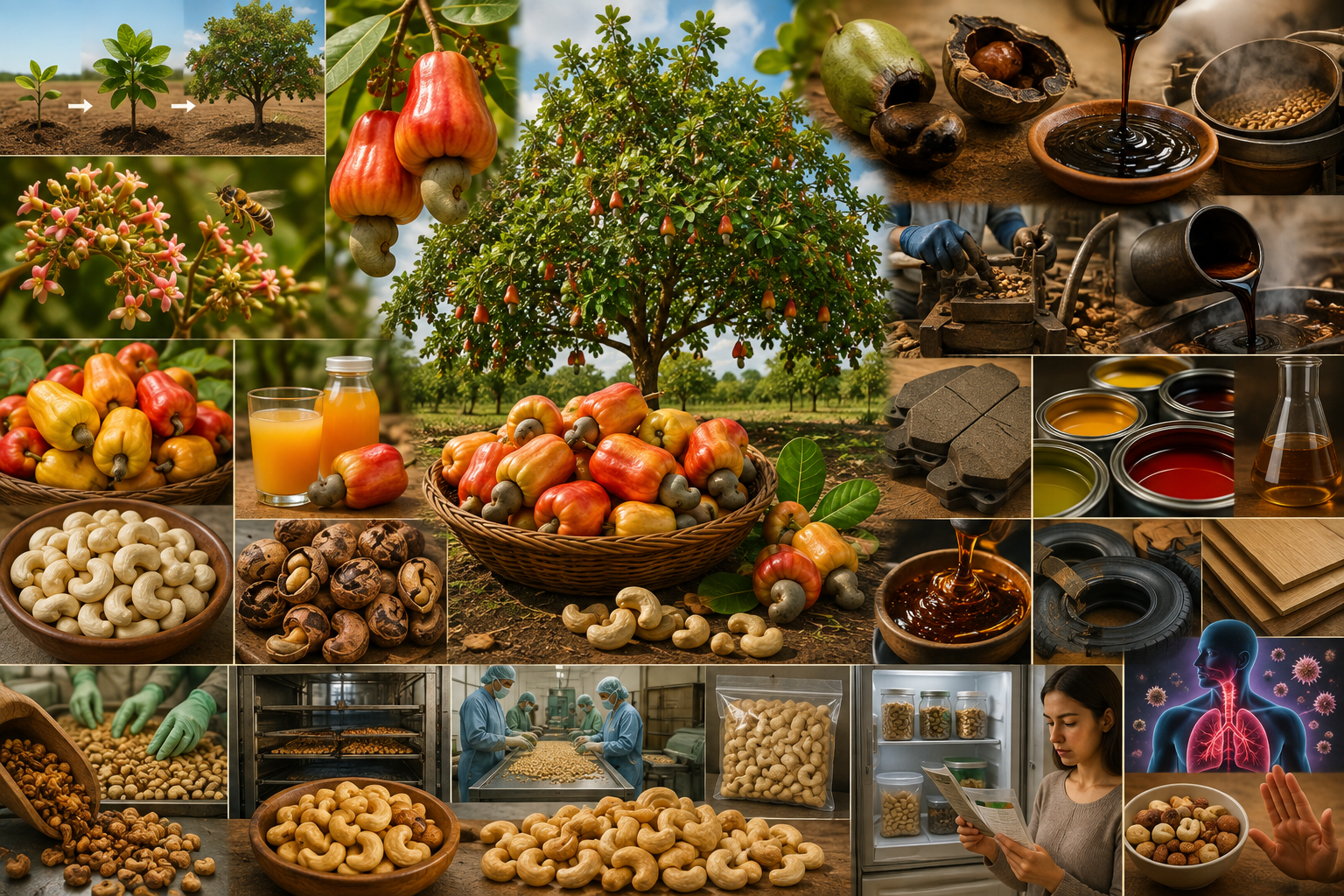
    Cashews are one of the most popular dry fruits in India, but the food we casually eat hides some surprisingly unusual facts. From the strange structure of the cashew fruit to the dangerous liquid inside its shell, cashews have a story that goes far beyond their taste.

    1. Cashew trees can start producing nuts surprisingly early

    A cashew tree can begin producing nuts as early as its third year after planting. According to the Food and Agriculture Organization (FAO), full yields are generally reached around eight to ten years after planting. FAO

    2. The cashew shell contains a dangerous liquid

    Between the outer shell and the edible kernel is cashew nut shell liquid (CNSL), a chemical-rich substance containing phenolic compounds. It is corrosive and can cause skin irritation, which is why cashew processing requires careful handling. FAO

    3. The “cashew nut” is actually the seed

    The part we call a cashew nut is botanically the seed. It develops beneath the fleshy structure commonly called the cashew apple. Inside the seed is the edible kernel that we normally eat. FAO and ICAR

    4. Cashew shells can contribute to automobile brake materials

    The liquid obtained from cashew shells is not simply agricultural waste. CSIR-NIIST documents CNSL applications in friction linings, while FAO specifically identifies cashew shell liquid as a raw material for brake-lining compounds. CSIR-NIIST and FAO

    5. The cashew apple is highly perishable

    The fleshy cashew apple deteriorates quickly after harvesting, which makes long-distance transportation and storage difficult. This is one reason consumers in places far from major cashew-growing regions rarely encounter fresh cashew apples. FAO

    6. Cashew apple can contain remarkably high vitamin C

    FAO material reports about 240 milligrams of vitamin C per 100 grams of cashew apple, compared with about 45 milligrams in the citrus examples cited there. Actual values can vary with variety and growing conditions. FAO

    7. Bees can be important to cashew production

    Cashew flowers depend on pollinating insects. Research from India has identified bees, including the giant honey bee Apis dorsata, as important cashew pollinators, linking pollinator activity with fruit and nut production. Research study

    8. You should not open freshly harvested cashews and eat them like peanuts

    A freshly harvested cashew still inside its shell is not equivalent to the shelled cashew sold in shops. The shell contains irritating and corrosive substances that must be dealt with during processing. Industrial processing uses controlled treatment before the edible kernel is separated. USDA Agricultural Research Service

    9. The cashew apple is edible but remains underutilized

    The cashew apple is not merely a discarded part of the plant. It can be processed into products such as juice and pulp. ICAR has been actively developing technologies and training programmes for cashew-apple processing and value addition to reduce post-harvest losses. ICAR

    10. Cashew harvesting can require considerable manual labour

    Cashew harvesting involves collecting mature nuts, often after they have fallen naturally to the ground, followed by drying and further processing. Traditional harvesting and processing therefore require substantial human labour. FAO

    11. Cashew can tolerate drought and relatively poor soil

    Cashew is a relatively hardy tropical crop. FAO describes it as tolerant of drought and poor soil, although adequate moisture and good management are still important when the goal is high commercial production. FAO

    12. India imports raw cashews despite being a major producer

    India has a large cashew-processing industry, but domestic production has not always been sufficient to meet the industry’s demand for raw cashew nuts. ICAR has highlighted India’s dependence on imported raw cashews and the need to increase domestic production. ICAR

    13. Cashew trees are commonly propagated through grafting

    Because cashew is cross-pollinated, seedlings can differ in yield, nut size, fruit characteristics and other traits. ICAR therefore recommends vegetative propagation, including softwood grafting, to produce genetically uniform plants with earlier and more predictable fruiting. ICAR

    14. Refrigeration can help extend cashew storage life

    Cashew kernels contain considerable fat, so storage conditions matter. FAO recommends suitable airtight packaging and reports that properly stored processed cashews can remain stable for extended periods, with refrigeration useful for longer-term preservation. FAO

    15. Cashews are particularly rich in dietary copper

    According to the U.S. National Institutes of Health, one ounce, approximately 28 grams, of dry-roasted cashews provides about 629 micrograms of copper, equivalent to approximately 70% of the Daily Value used in the U.S. nutrition system. NIH Office of Dietary Supplements

    16. “Raw cashews” are not completely untreated

    The word “raw” on commercially sold cashews can be misleading. USDA food-composition documentation explains that cashews marketed as raw have already undergone heat treatment to safely remove the kernel from the shell; they simply have not been additionally roasted for flavour. USDA Agricultural Research Service

    17. Cashew-shell chemicals have applications far beyond food

    CNSL and its derivatives are used as renewable industrial raw materials. CSIR-NIIST lists applications including friction linings, paints, varnishes, laminating resins, rubber-compounding resins, polyurethane polymers and epoxy resins. CSIR-NIIST

    18. Cashew allergy can be serious

    Cashew is a recognized food allergen, and allergic reactions can be severe in some people. USDA Agricultural Research Service research has identified several cashew allergens and has investigated how processing affects their properties. People with a known cashew allergy should avoid cashews and carefully check packaged-food ingredients and allergen information. USDA Agricultural Research Service

    Why these facts matter

    Cashews are much more than a popular dry fruit. Their unusual fruit structure, hazardous shell liquid, complex processing, nutritional composition, agricultural requirements and industrial applications make them one of the more fascinating food crops. The next time you eat a handful of cashews, remember that the edible kernel is only one small part of a much more complicated biological and industrial story.

    Important note

    The information in this article is provided for educational purposes. Nutrition and food-safety information can depend on the product, preparation method and individual circumstances. For allergies, dietary restrictions or other health-related decisions, consult an appropriate qualified professional and verify information with authoritative sources.

    Official Sources

    Food and Agriculture Organization (FAO) — Cashew Nut

    Indian Council of Agricultural Research (ICAR)

    USDA Agricultural Research Service

    U.S. National Institutes of Health — Office of Dietary Supplements

    CSIR — National Institute for Interdisciplinary Science and Technology

    Interactive Knowledge Check

    Cashew Botany Challenge

    Test what you just learned from this article. Tap the correct answer!
  • आपके मुँह के अंदर छिपी 18 अद्भुत वैज्ञानिक बातें

    आपके मुँह के अंदर छिपी 18 अद्भुत वैज्ञानिक बातें

    💡 Did You Know? Science Secret

    Did you know tooth enamel is the hardest substance in the human body?

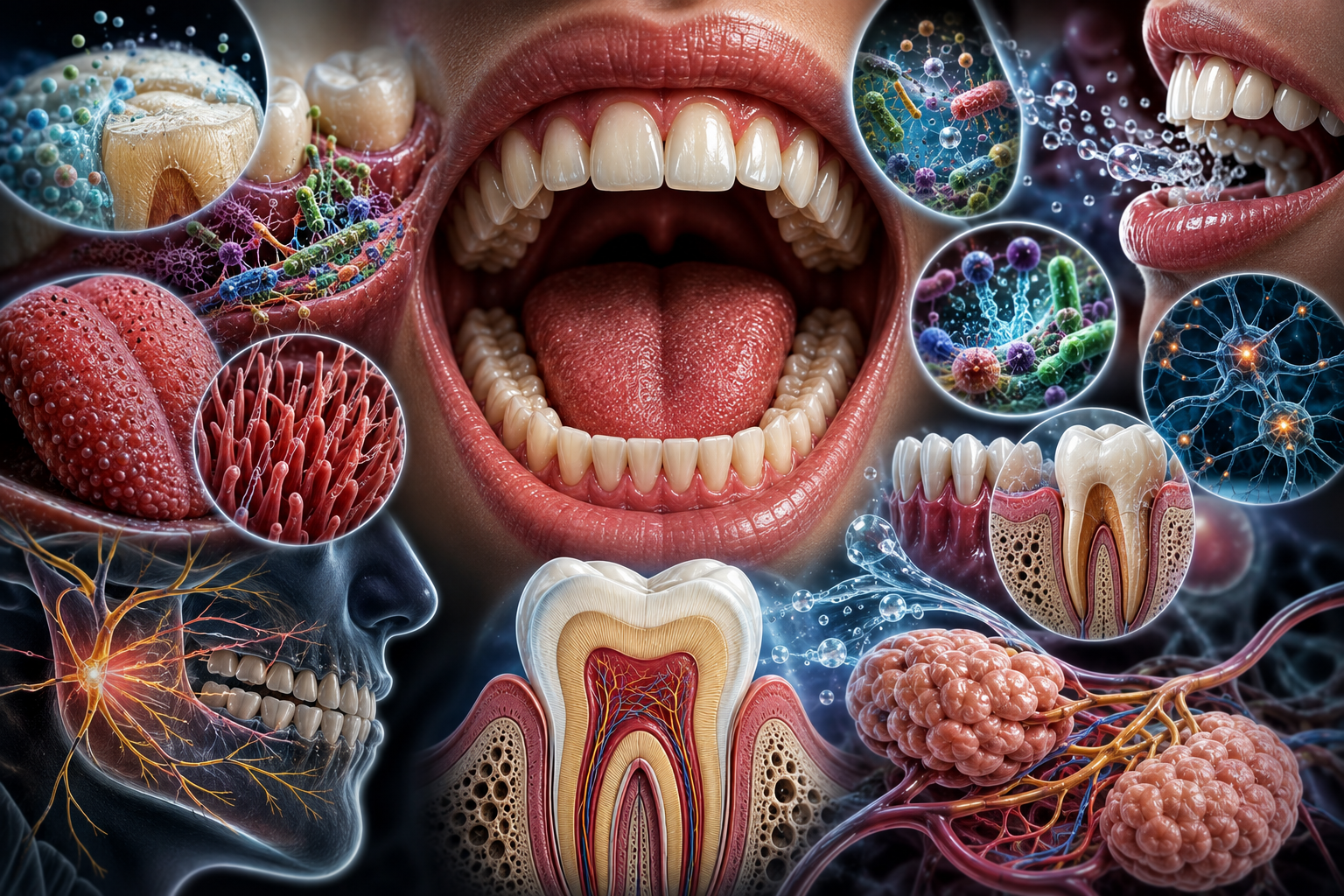
    हमारा मुँह सिर्फ खाना चबाने और निगलने की जगह नहीं है। इसके अंदर हर समय एक जटिल biological system काम करता रहता है, जिसमें saliva, teeth, tongue, gums, microorganisms, nerves और immune defenses लगातार एक-दूसरे के साथ interact करते हैं। आइए जानते हैं मानव मुँह के अंदर होने वाली 18 ऐसी अद्भुत बातें, जिनके बारे में बहुत कम लोग सोचते हैं।

    1. मुँह एक छोटी-सी Chemical Laboratory है

    लार में proteins, enzymes, minerals और antimicrobial components होते हैं। ये भोजन को नम करने, निगलने, digestion की शुरुआत करने, दाँतों की सुरक्षा और oral microorganisms को नियंत्रित करने में भूमिका निभाते हैं।

    आधिकारिक स्रोत: National Institute of Dental and Craniofacial Research (NIDCR)

    2. लार दाँतों के शुरुआती Mineral Loss को कम करने में मदद करती है

    खाने के बाद acids के कारण enamel से कुछ minerals निकल सकते हैं। लार में मौजूद calcium और phosphate जैसे minerals तथा saliva की buffering क्षमता शुरुआती demineralization के बाद remineralization में मदद करती है। शुरुआती अवस्था में tooth decay को रोका या reverse किया जा सकता है, लेकिन पूरी तरह नष्ट हो चुके enamel को लार वापस नहीं उगा देती।

    आधिकारिक स्रोत: NIDCR — Tooth Decay | American Dental Association — Salivary Diagnostics

    3. जीभ सिर्फ स्वाद पहचानने का अंग नहीं है

    जीभ की सतह पर मौजूद papillae और sensory structures भोजन की texture, दबाव और अन्य mechanical sensations को महसूस करने में मदद करते हैं। इसलिए खाना खाते समय हम सिर्फ उसका स्वाद नहीं, बल्कि उसकी बनावट भी महसूस करते हैं।

    आधिकारिक स्रोत: NIDCR — Taste Disorders

    4. लार मुँह का Chemical Balance संभालती है

    खाने और पीने के बाद oral environment का pH बदल सकता है। Saliva acids को buffer करने, मुँह को साफ रखने और दाँतों की mineral balance बनाए रखने में मदद करती है।

    आधिकारिक स्रोत: American Dental Association — Salivary Diagnostics

    5. लार Taste महसूस करने में महत्वपूर्ण है

    भोजन के कई chemical compounds को taste receptors तक पहुँचने के लिए saliva में घुलना पड़ता है। इसी कारण saliva की कमी होने पर taste perception प्रभावित हो सकती है।

    आधिकारिक स्रोत: NIDCR — Dry Mouth | NIDCR — Taste Disorders

    6. ठंड सीधे दाँत की नस तक नहीं पहुँचती

    दाँत की sensitivity में बाहरी तापमान परिवर्तन dentin में मौजूद microscopic tubules के fluid को प्रभावित कर सकता है। इस fluid movement से pulp के पास sensory nerve endings उत्तेजित हो सकती हैं और तेज sensation या pain महसूस हो सकता है।

    आगे पढ़ें: NIDCR — Tooth Decay and Tooth Sensitivity

    7. मुँह के अंदर एक विशाल Microbial Ecosystem रहता है

    मानव मुँह में bacteria, fungi, viruses और अन्य microorganisms की विविध community रहती है। ये जीभ, दाँतों, मसूड़ों और अन्य oral surfaces पर अलग-अलग परिस्थितियों में पाए जाते हैं।

    आधिकारिक स्रोत: NIDCR — Exploring the Mouth’s Microbial Wonders

    8. जीभ की Grooves microorganisms के लिए sheltered spaces बनाती हैं

    जीभ की असमान सतह और papillae के बीच की जगहों में saliva, food residues और microorganisms जमा हो सकते हैं। इसी वजह से जीभ oral microbial ecosystem का एक महत्वपूर्ण habitat है।

    आधिकारिक स्रोत: NIDCR — Exploring the Mouth’s Microbial Wonders

    9. Dental Plaque सिर्फ खाने के बचे हुए टुकड़े नहीं हैं

    Dental plaque एक structured microbial biofilm है। इसमें microorganisms एक sticky matrix के भीतर organized community बना सकते हैं और tooth surface से चिपके रह सकते हैं।

    आधिकारिक स्रोत: NIDCR — Dental Plaque and Flossing | NIDCR — Probing Periodontal Disease

    10. मुँह के Bacteria दाँतों के आसपास Acid बना सकते हैं

    कुछ oral bacteria dietary carbohydrates को metabolize करके acids बना सकते हैं। ये acids tooth enamel से minerals निकालने की प्रक्रिया, यानी demineralization, को बढ़ा सकते हैं। अगर यह प्रक्रिया बार-बार होती रहे और protective factors पर्याप्त न हों, तो tooth decay विकसित हो सकता है।

    आधिकारिक स्रोत: NIDCR — Tooth Decay | American Dental Association — Caries Risk Assessment and Management

    11. सोते समय मुँह की Natural Cleaning धीमी हो जाती है

    नींद के दौरान salivary flow सामान्यतः कम हो जाता है। इससे saliva की cleansing और buffering activity कम हो सकती है, जिससे microorganisms और odor-producing compounds अधिक noticeable हो सकते हैं। यही morning breath के प्रमुख कारणों में से एक है।

    आधिकारिक स्रोत: NIDCR — Dry Mouth

    12. स्वस्थ मसूड़े दाँत के आसपास Protective Barrier बनाते हैं

    Gum tissue और tooth के बीच का junction oral environment और deeper tissues के बीच एक महत्वपूर्ण biological barrier है। स्वस्थ periodontal tissues microorganisms और उनके products को deeper tissues तक पहुँचने से सीमित करने में मदद करते हैं।

    आधिकारिक स्रोत: NIDCR — Probing Periodontal Disease

    13. जिसे हम “Flavor” कहते हैं, उसमें Smell की बड़ी भूमिका होती है

    Taste receptors sweet, sour, bitter, salty और savory जैसी taste qualities को detect करते हैं। भोजन से निकलने वाले volatile molecules smell system को activate करते हैं। Taste और smell मिलकर हमारे flavor perception में योगदान देते हैं।

    आधिकारिक स्रोत: NIDCR — Taste Disorders

    14. मुँह खुद को लगातार साफ करता रहता है

    Saliva का flow, tongue movement, cheek movement और swallowing मिलकर loose food particles तथा अन्य पदार्थों को oral surfaces से हटाने में मदद करते हैं। Saliva oral tissues को lubricate और protect भी करती है।

    आधिकारिक स्रोत: NIDCR — Saliva and Salivary Gland Disorders | NIDCR — Dry Mouth

    15. लार में Antimicrobial Defense मौजूद होती है

    Saliva में antibodies और कई antimicrobial components होते हैं, जो oral microorganisms को नियंत्रित करने में मदद करते हैं। इसलिए saliva केवल digestion की शुरुआत करने वाला fluid नहीं है; यह oral defense system का भी हिस्सा है।

    आधिकारिक स्रोत: NIDCR — Saliva and Salivary Gland Disorders

    16. दाँतों के आसपास Microscopic Pressure Sensors होते हैं

    दाँत के आसपास periodontal tissues में sensory nerve endings मौजूद होते हैं। जब चबाने के दौरान दाँत पर force लगता है, ये sensory structures mechanical information detect करने में मदद करते हैं। इससे nervous system को bite force और tooth position के बारे में जानकारी मिलती है।

    आधिकारिक स्रोत: NIDCR — Somatosensation and Pain Research

    17. चबाने पर Saliva Production बढ़ सकती है

    Chewing oral sensory signals को activate करता है, जिससे salivary glands की secretion बढ़ सकती है। बढ़ी हुई saliva food को lubricate करती है, swallowing आसान बनाती है और oral acids को dilute तथा buffer करने में मदद करती है।

    आधिकारिक स्रोत: NIDCR — Saliva and Salivary Gland Disorders

    18. कठोर दिखने वाला दाँत अंदर से जीवित होता है

    दाँत के केंद्र में dental pulp नाम का living tissue होता है, जिसमें blood vessels, nerves और connective tissue मौजूद होते हैं। इसलिए दाँत बाहर से अत्यंत कठोर दिखाई देने के बावजूद अंदर से एक जीवित biological structure है।

    आधिकारिक स्रोत: NIDCR — Tooth Decay

    निष्कर्ष

    मानव मुँह एक बेहद जटिल biological ecosystem है। यहाँ saliva लगातार chemical protection देती है, teeth mineral loss और remineralization के cycles से गुजरते हैं, tongue sensory information collect करती है, microorganisms अपना ecosystem बनाते हैं, gums protective barrier प्रदान करते हैं और nerves लगातार mechanical तथा thermal signals detect करती हैं। यानी हम हर समय अपने मुँह के अंदर एक microscopic biological world लेकर घूम रहे हैं।

    महत्वपूर्ण नोट: यह लेख सामान्य वैज्ञानिक जानकारी के लिए है। लगातार दाँत के दर्द, sensitivity, bleeding gums, dry mouth या किसी अन्य oral समस्या के लिए dentist या qualified healthcare professional से सलाह लें।

    Interactive Knowledge Check

    Human Mouth Biology Quiz

    Test what you just learned from this article. Tap the correct answer!
  • Amazing Facts About Tomatoes: 18 Science-Backed Secrets You Probably Didn’t Know

    💡 Did You Know? Science Secret

    Did you know cooking tomatoes actually makes them healthier to absorb?

    Tomatoes are one of the most familiar foods in the world, but behind this ordinary-looking fruit is a fascinating story involving botany, chemistry, plant defense, nutrition, agriculture, space research and food history.

    Here are 18 scientifically verified facts about tomatoes that reveal just how remarkable this everyday food really is.

    1. A Tomato Is Botanically a Fruit — and More Specifically, a Berry

    We commonly call tomatoes vegetables because they are used in savory dishes. Botanically, however, a tomato develops from the flower’s ovary and contains seeds, so it is classified as a fruit. Botanically, the tomato is specifically a berry.

    Official source: Royal Botanic Gardens, Kew

    2. Tomatoes Originally Come From South America

    The wild relatives of cultivated tomatoes are native to western South America, particularly areas stretching from Ecuador toward northern Chile and the Galápagos region. Tomato domestication has a more complicated history, with scientific evidence supporting important roles for both South America and Mexico.

    Official source: USDA Agricultural Research Service

    3. Europeans Once Considered Tomatoes Potentially Poisonous

    When tomatoes reached Europe, they were initially grown by some people as ornamental plants and were regarded with suspicion. Their membership in the nightshade family contributed to concerns about their safety.

    Official source: Royal Botanic Gardens, Kew

    4. Tomatoes Belong to the Nightshade Family

    Tomatoes belong to the plant family Solanaceae, commonly called the nightshade family. Their relatives include potatoes, eggplants and peppers. This relationship can be seen in similarities in their flowers, plant chemistry and genetics.

    Official source: Royal Botanic Gardens, Kew

    5. Tomatoes Come in Many Colors

    Red may be the color most people associate with tomatoes, but cultivated tomatoes can also be yellow, orange, green, purple and other colors. Differences in pigments and genetics influence the final appearance of the fruit.

    Official source: Royal Botanic Gardens, Kew

    6. A Tomato’s Red Color Is Closely Linked to Lycopene

    One of the major pigments responsible for the characteristic red color of ripe tomatoes is lycopene, a carotenoid compound. Lycopene is also an important subject of nutritional and food-science research because of its antioxidant properties.

    Official source: USDA Agricultural Research Service

    7. Cooking Tomatoes Can Make Lycopene More Bioavailable

    Heat and food processing can alter the structure of tomato tissues and lycopene. Research has found that processed or cooked tomato products can provide lycopene in a form that is more bioavailable than lycopene from some raw preparations. This does not mean that raw tomatoes are unhealthy; rather, different preparation methods can affect nutrient availability.

    Official source: USDA Agricultural Research Service

    8. Tomatoes Are Mostly Water

    Tomatoes have a very high water content, which contributes to their juicy texture and relatively low energy density. Their nutritional composition also includes vitamins, minerals, fiber and naturally occurring plant compounds.

    Official source: USDA Agricultural Research Service

    9. Tomato Plants Have Their Own Chemical Defense System

    When tomato leaves are attacked by herbivorous insects, the plant can release volatile organic compounds into the surrounding air. These chemical signals can influence interactions with other organisms, including parasitoid insects that attack the plant-eating pests.

    This is an example of how a plant can chemically respond to an attack rather than simply remaining passive.

    Official research source: University of South Carolina

    10. Tomato Leaves and Stems Contain More Tomatine Than Ripe Fruit

    Tomato plants naturally produce glycoalkaloids such as alpha-tomatine. Concentrations are generally much higher in leaves and stems and in immature green fruit than in ripe red tomatoes, where levels decline substantially during ripening.

    This is one reason tomato leaves and stems are not normally treated as food, even though ripe tomatoes are commonly eaten.

    Official research source: University of California, Davis

    11. Tomato Plants Can Produce Large Numbers of Fruits

    Under suitable growing conditions, tomato plants can continue producing flowers and fruit throughout the growing season. The actual number depends heavily on the cultivar, growing environment, pruning, pollination, nutrition and disease pressure.

    Official source: University of Minnesota Extension

    12. Tomatoes Can Continue Ripening After Being Picked

    Many tomatoes can continue to ripen after harvest if they have reached the appropriate stage of physiological maturity. During ripening, the fruit changes color, texture and flavor. Properly mature green tomatoes can ripen indoors under suitable conditions.

    Official source: University of Minnesota Extension

    13. Ethylene Is an Important Part of Tomato Ripening

    Ethylene is a plant hormone that plays a major role in the ripening process of climacteric fruits, including tomatoes. Changes associated with ripening include color development, softening and changes in flavor and aroma.

    Official source: University of Minnesota Extension

    14. Tomatoes Can Get Sunscald

    Tomatoes can suffer from a condition called sunscald when fruit tissue is exposed to excessive direct sunlight. The affected area can become tan or white and may eventually dry and become wrinkled. Healthy foliage can help protect developing fruit from intense sunlight.

    Official source: University of Minnesota Extension

    15. Scientists Are Studying Tomatoes for Space Agriculture

    Tomatoes are not just an Earth crop. NASA and its partners have studied tomato production in controlled space environments because growing fresh food could become important during future long-duration missions.

    NASA’s space-crop research includes experiments involving dwarf tomatoes and studies of plant growth, nutrition, microbial food safety and other factors relevant to growing food in space.

    Official source: NASA Science

    16. Tomatoes Have Been Part of Space-Related Plant Research

    NASA has conducted experiments involving tomato plants grown from seeds exposed to simulated space radiation. Researchers have examined plant growth and nutritional characteristics to better understand whether nutritious crops can be reliably produced for future space missions.

    Official source: NASA

    17. China Is the World’s Largest Tomato Producer

    Tomatoes are cultivated on a massive scale worldwide, and China has historically been the world’s largest tomato-producing country. FAO production statistics show China’s tomato production at a much larger scale than that of most other individual countries.

    Official source: Food and Agriculture Organization of the United Nations (FAO)

    18. Modern Ketchup Has a Much Older Sauce History

    The history behind the word and concept of ketchup predates the modern tomato-based condiment. Earlier forms of ketchup were associated with fermented sauces, including fish-based preparations in Asia. Over time, the condiment evolved through different cultures and recipes before tomato ketchup became the familiar version used today.

    It is therefore more accurate to say that modern tomato ketchup is the result of a long culinary evolution rather than an invention that began with the tomato itself.

    Historical source: Encyclopaedia Britannica

    Why Tomatoes Are Scientifically Fascinating

    A tomato may look like an ordinary kitchen ingredient, but its biology tells a much bigger story. It is botanically a berry, evolved from wild relatives in South America, contains specialized pigments and defensive chemicals, responds chemically to insect attacks, continues biological changes after harvest, and has even become part of research into growing food beyond Earth.

    That combination of everyday familiarity and sophisticated biology makes the tomato a perfect example of how much science can be hidden inside an ordinary food.

    Sources and Further Reading

    Editorial note: This article is intended for educational purposes. Scientific understanding and agricultural statistics can change as new research and updated datasets become available.

    Interactive Knowledge Check

    Tomato Science Quiz

    Test what you just learned from this article. Tap the correct answer!
  • Ants Hidden Secrets: 18 Amazing Facts About Ants — Scientifically Verified

    💡 Did You Know? Science Secret

    Did you know that ants breathe without any lungs?

    Ants may be tiny, but their hidden world is extraordinary. They can carry enormous loads relative to their size, communicate chemically, cultivate fungi, build living bridges, survive floods as floating rafts, recognize nestmates by chemical signatures, navigate using celestial cues, and even sacrifice themselves to defend their colony.

    Below are the 18 facts featured in the AI Explains It video, with scientific qualifications wherever necessary.


    1. Some Ants Can Carry 10–50 Times Their Own Body Weight

    Ants are extraordinarily strong relative to their size. Depending on the species and how strength is measured, ants can carry loads many times heavier than themselves. Research and educational material from Arizona State University notes that ants can carry roughly 10–50 times their body weight.

    Their small size is important: muscle strength does not decrease as rapidly as body mass when animals become smaller, giving insects a remarkable strength-to-weight advantage.

    Source: Arizona State University — Ask A Biologist

    2. Earth May Contain About 20 Quadrillion Ants

    A major global analysis published in the Proceedings of the National Academy of Sciences estimated that Earth is home to approximately 20 quadrillion ants — about 20,000,000,000,000,000 individual ants.

    The researchers emphasized that this was a scientific estimate rather than an exact census, and suggested that the true number could be even higher because some habitats remain poorly sampled.

    At that estimate, there are roughly 2.5 million ants for every human.

    Source: Proceedings of the National Academy of Sciences (PNAS)

    3. Ants Do Not Have Lungs

    Ants do not breathe using lungs like humans do.

    Instead, air enters through tiny openings called spiracles located along the body. These openings connect to an extensive network of tubes called the tracheal system, which transports gases through the insect’s body.

    This means an ant’s respiratory system is fundamentally different from that of mammals.

    Source: U.S. National Library of Medicine — PubMed Central

    4. Ants Communicate Using Chemical Signals

    Ants have sophisticated chemical communication systems.

    Many species release pheromones that can mark trails leading to food or other important locations. Other chemical signals can communicate alarm, recruitment, colony identity, and reproductive information.

    Research on ants such as Lasius niger has demonstrated the importance of pheromone trails in foraging and navigation.

    So an ant colony can effectively create a chemical information network across its environment.

    Source: PubMed — Journal of Experimental Biology

    5. Some Ant Colonies Can Survive for 20–30 Years

    This fact requires an important qualification: not every ant queen lives for 20–30 years.

    However, long-lived queens and colonies are scientifically documented. Long-term research on red harvester ants (Pogonomyrmex barbatus) has documented colonies surviving for approximately 20–30 years.

    So, for certain species, an ant colony really can persist for decades.

    Source: PubMed — Long-term research on harvester ant colonies

    6. Some Army Ants Build Living Bridges

    Certain army ants can literally turn their own bodies into bridges.

    Workers link their bodies together across gaps in their foraging trails, allowing other ants to pass over the living structure. Research has shown that these bridges can dynamically change their position and dimensions depending on traffic and the surrounding environment.

    This means an ant colony can temporarily turn its own workers into biological infrastructure.

    Source: PubMed — Research on army-ant living bridges

    7. Leafcutter Ants Are Farmers

    Leafcutter ants do something remarkable with the leaves they collect: they use them to cultivate fungi.

    The ants cut plant material, carry it underground, prepare it, and incorporate it into their fungus gardens. The cultivated fungus becomes an important nutritional resource for the colony.

    In other words, these ants are not simply collecting leaves to eat. They are maintaining a biological crop.

    Source: PubMed — Scientific research on fungus-growing ants

    8. Some Ants “Farm” Aphids for Honeydew

    Some ant species maintain close relationships with aphids.

    Aphids feed on plant sap and produce a sugary liquid called honeydew, which ants collect. In return, ants may protect aphids from predators and provide other forms of care.

    Calling this “farming” is a useful analogy rather than saying that aphids are domesticated exactly like human livestock, but the relationship can be remarkably organized.

    Source: PubMed — Research on ant–aphid mutualism

    9. Ants Can Recognize Their Nestmates Chemically

    An ant colony needs to distinguish its own members from outsiders.

    Many ants use chemical compounds called cuticular hydrocarbons on their body surfaces as part of their colony-recognition system. Workers can detect differences between chemical profiles associated with nestmates and non-nestmates.

    These chemical signatures effectively provide ants with a biological system of colony identity.

    Source: PubMed — Research on nestmate recognition

    10. Ant Colonies Can Fight Organized Territorial Battles

    Ant colonies can engage in serious territorial conflicts over food, nesting sites, and other resources.

    Researchers have documented large-scale conflicts involving coordinated recruitment and interactions between workers from competing colonies.

    Although calling these conflicts “wars” is a popular analogy rather than a literal equivalent of human warfare, organized territorial aggression is a well-documented part of ant biology.

    Source: PubMed — Research on ant collective territorial conflict

    11. Some Ants Raid Other Colonies and Steal Their Pupae

    Some slave-making ants practice a remarkable form of social parasitism known as dulosis.

    Species such as Polyergus raid neighboring ant colonies and carry away their pupae. When those pupae develop into adults inside the raiding colony, the newly emerged workers perform normal tasks such as brood care and nest maintenance.

    The ants are effectively recruited into a colony that is not their original home.

    Source: PubMed — Research on slave-making ants

    12. The Bullet Ant Has an Exceptionally Painful Sting

    The bullet ant, Paraponera clavata, is famous for its extraordinarily painful sting.

    Its venom contains poneratoxin, a peptide toxin that affects ion channels involved in nerve and muscle function.

    The species is also famous in the work of entomologist Justin Schmidt, whose research comparing the pain caused by stinging insects contributed to the Schmidt Sting Pain Index.

    The safest scientific description is that the bullet ant produces one of the most intensely painful stings known among insects.

    Source: PubMed — Research on bullet-ant venom

    13. Fire Ants Can Form Floating Rafts During Floods

    When floodwater threatens a colony of red imported fire ants, Solenopsis invicta, workers can link their bodies together to form a floating structure.

    These living rafts have remarkable water-repellent properties. Research has shown that thousands of ants can self-assemble into buoyant structures that help the colony survive flooding.

    The colony effectively transforms individual insects into a temporary floating survival system.

    Source: PubMed — Research on fire-ant floating rafts

    14. Some Ants Sacrifice Themselves to Defend Their Colony

    “Exploding ants” are real.

    The ant Colobopsis explodens belongs to a group in which certain workers can use an extreme defensive behavior involving rupture of their own body and release of sticky chemical secretions.

    This self-sacrificial defense can help protect other members of the colony from threats.

    It is more scientifically accurate to describe the behavior as self-rupture or autothysis rather than a conventional explosion.

    Source: ZooKeys — Colobopsis explodens

    15. Ants Do Not Have Mammalian Ears, but They Can Detect Vibrations

    Ants do not have external ears like humans.

    However, this does not mean they are unable to detect mechanical sounds or vibrations. Insects possess specialized mechanosensory structures that can detect vibrations transmitted through surfaces and the body.

    Ants can use vibrational information for communication and environmental sensing.

    So the more accurate statement is: ants do not have ears like ours, but they can perceive vibrations.

    Source: PubMed — Research on insect vibration sensing

    16. Desert Ants Can Navigate Using the Sky

    Desert ants of the genus Cataglyphis can travel across seemingly featureless terrain and still find their way home.

    They use path integration, continuously maintaining an internal estimate of their direction and distance traveled. They also use celestial information, including the Sun and patterns of polarized light in the sky.

    This gives these tiny insects a remarkably sophisticated natural navigation system.

    Source: PubMed — Research on desert-ant navigation

    17. The Queen Does Not Simply Command the Colony

    The word “queen” can give the wrong impression.

    In many ant species, the queen’s primary role is reproduction, especially laying eggs. She does not normally sit in the nest issuing individual commands to workers.

    Instead, workers coordinate tasks through local interactions, chemical signals, environmental information, and interactions with other workers.

    This creates a decentralized system in which sophisticated colony-level behavior emerges from many individual interactions.

    Source: Arizona State University — Ask A Biologist

    18. Ants Are Important Recyclers, Soil Engineers, and Seed Dispersers

    Ants play major ecological roles.

    They can transport and bury seeds, move soil, recycle organic material, prey on other organisms, influence nutrient cycling, and interact with plants and other animals.

    Because ants are so abundant and widespread, their collective ecological influence is enormous.

    The global estimate of roughly 20 quadrillion ants highlights just how significant their presence is across terrestrial ecosystems.

    Source: Arizona State University — Ask A Biologist and Proceedings of the National Academy of Sciences (PNAS)


    The Bigger Secret: Ants Are More Than Individual Insects

    The most astonishing thing about ants may not be their strength, venom, navigation, or strange survival strategies.

    It is the fact that complex behavior can emerge from thousands or millions of relatively simple individuals interacting with one another.

    An individual worker does not need a central commander telling it exactly what to do. Chemical signals, physical interactions, environmental information, previous experience, and relatively simple behavioral rules can collectively produce remarkably sophisticated outcomes.

    This is called self-organization or collective behavior.

    That is why scientists study ants not only as insects, but also as examples of:

    • Collective intelligence
    • Distributed decision-making
    • Self-organization
    • Swarm behavior
    • Biological engineering
    • Social evolution
    • Ecosystem engineering

    From fungal agriculture to living bridges, from chemical identity systems to flood-survival rafts, ants demonstrate an extraordinary principle of biology:

    Sometimes the intelligence of a system emerges from the interactions between many individuals rather than being controlled by one individual.


    Fact-Check Summary

    # Fact Scientific Status
    1Some ants can carry 10–50× their body weightVerified
    2Earth has about 20 quadrillion antsVerified estimate
    3Ants have no lungsVerified
    4Ants communicate chemicallyVerified
    5Some ant colonies can live 20–30 yearsVerified, species-specific
    6Some army ants build living bridgesVerified
    7Leafcutter ants cultivate fungiVerified
    8Some ants tend aphids for honeydewVerified
    9Ants recognize nestmates chemicallyVerified
    10Ants engage in territorial conflictsVerified
    11Slave-making ants steal pupaeVerified
    12Bullet ants have exceptionally painful stingsVerified
    13Fire ants form floating raftsVerified
    14Some ants use self-sacrificial defenseVerified
    15Ants detect vibrations without mammalian earsVerified
    16Desert ants use path integration and celestial cuesVerified
    17Queens generally do not directly command workersVerified with nuance
    18Ants perform important ecosystem functionsVerified

    Scientific Sources


    Final takeaway: Ants may occupy only a tiny space in the physical world, but their collective impact is enormous. They build, farm, fight, communicate, navigate, recycle nutrients, disperse seeds, survive floods, recognize strangers, and sometimes even sacrifice themselves for their colony.

    The hidden world beneath our feet is far more sophisticated than it looks.

    This article was fact-checked against scientific and institutional sources. Several facts describe particular ant species or groups rather than every ant species, and those distinctions are identified in the relevant sections.

    Interactive Knowledge Check

    Ant Biology Trivia

    Test what you just learned from this article. Tap the correct answer!
  • Mahua Fruit: 18 Amazing Facts About Its Fruit, Seeds, Flowers and Uses

    Mahua Fruit: 18 Amazing Facts About Its Fruit, Seeds, Flowers and Uses

    💡 Did You Know? Science Secret

    Did you know Mahua flowers are naturally succulent and sugary?

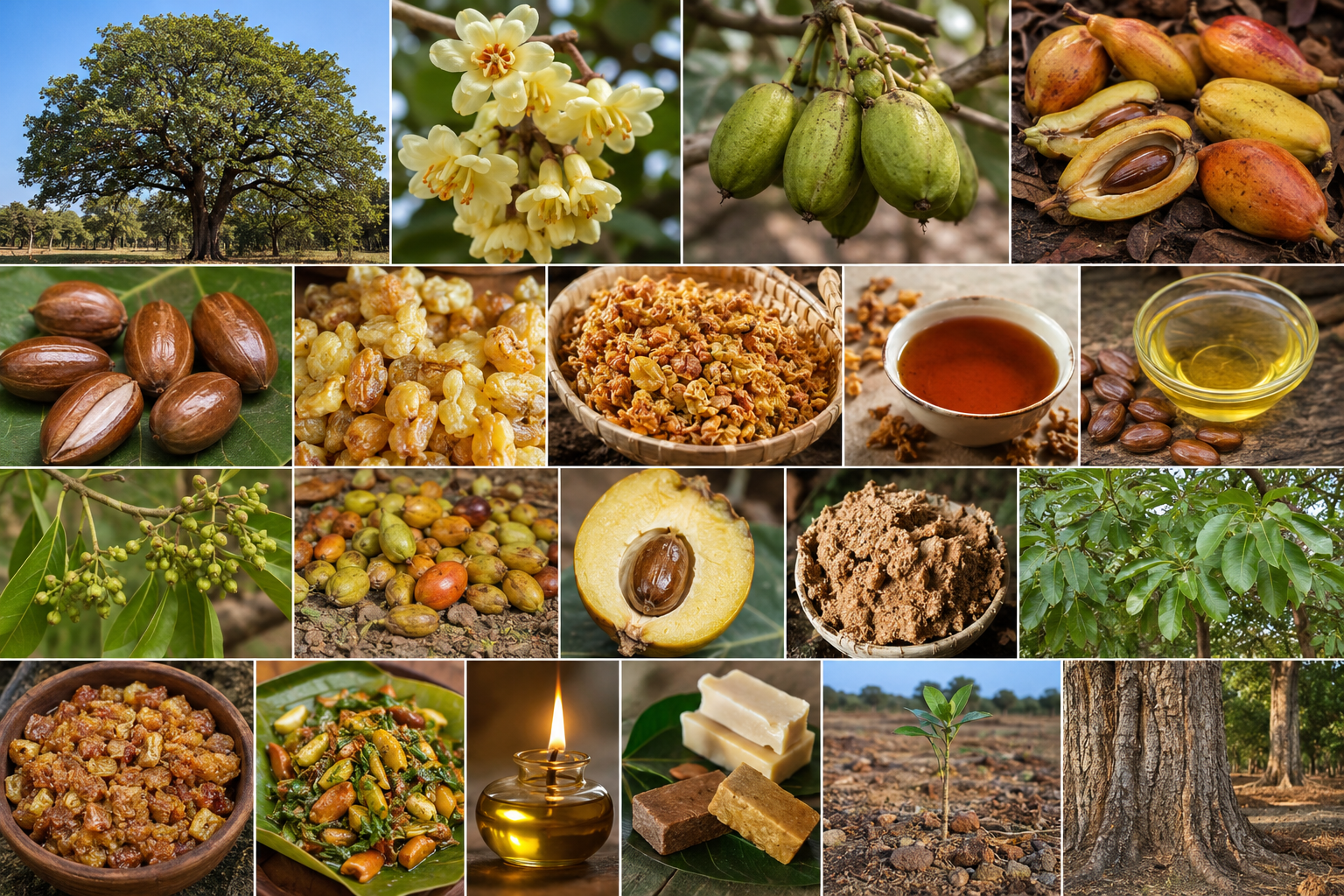
    Mahua (Madhuca longifolia) is one of India’s most useful multipurpose forest trees. It belongs to the Sapotaceae family and is valued for its fruits, seeds, flowers, oil and other products. Government and forestry sources describe Mahua as an important species for food, fodder, fuel and local livelihoods.

    1. Mahua Fruit Is Fleshy and Contains Oily Seeds

    Mahua produces fleshy, greenish fruits. Inside the fruit are typically one to four shiny, brown and oil-rich seeds. The fruit and its seeds are therefore both biologically and economically important.

    Official source: Indian Council of Forestry Research and Education (ICFRE) – Modern Nursery Techniques

    2. Mahua Seeds Are Exceptionally Rich in Oil

    Mahua seeds contain a high proportion of lipids. Research literature reports approximately 50-61% lipid content in the seeds. The extracted fat is commonly known as Mahua or Mowrah butter.

    Source: National Institutes of Health, PubMed Central – Functional characteristics, nutritional value and industrial applications of Madhuca longifolia seeds

    3. Mahua Seed Oil Has Many Practical Uses

    Oil extracted from Mahua seeds has several traditional and industrial applications. Government sources document its use for cooking and lighting, while other forestry literature also describes applications such as soap-making and other non-food uses.

    Official source: National Portal of India – Mahua – One District One Product

    4. One Mahua Tree Provides Many Useful Products

    Mahua is not simply a fruit tree. Its flowers, fruits, seeds, oil, leaves and wood all have documented uses. This makes it a classic multipurpose forest species.

    Official source: Indian Council of Forestry Research and Education (ICFRE) – Cultivation of Selected Forest Tree Species

    5. Mahua Flowers Are Naturally Rich in Sugars

    Mahua flowers contain substantial amounts of naturally occurring sugars. Their sweetness makes them useful as a traditional food resource and also makes them suitable for fermentation.

    Official source: Indian Council of Forestry Research and Education (ICFRE) – Cultivation of Selected Forest Tree Species

    6. Mahua Flowers Have Food Uses

    Mahua flowers are traditionally eaten in several regions. ICFRE documents their use as food and describes their nutritional contribution, including carbohydrates, minerals and vitamins.

    Official source: Indian Council of Forestry Research and Education (ICFRE) – Cultivation of Selected Forest Tree Species

    7. Mahua Flowers Are Used for Traditional Fermented Beverages

    Because the flowers contain fermentable sugars, they have traditionally been used to produce fermented and distilled beverages in parts of India. This is an important cultural and economic use of Mahua flowers.

    Official source: National Portal of India – Mahua – One District One Product

    8. Mahua and Chikoo Belong to the Same Botanical Family

    Mahua belongs to the family Sapotaceae. Chikoo, commonly known botanically as sapota, also belongs to Sapotaceae. So although the two fruits look different, they share a botanical family.

    Official source: Botanical Survey of India – Floristic and Ethnobotanical Studies

    9. Mahua Seeds Are Surprisingly Large

    Mahua seeds are elongated, brown and shiny. Published botanical descriptions report seeds around 2 centimetres long, making them a substantial part of the fleshy fruit.

    Source: National Institutes of Health, PubMed Central – Madhuca longifolia seed research

    10. Mahua Is a Deciduous Tree

    Mahua naturally sheds its leaves as part of its seasonal cycle. ICFRE describes it as a medium-sized deciduous tree with a broad crown.

    Official source: Indian Council of Forestry Research and Education (ICFRE) – Modern Nursery Techniques

    11. Mahua Leaves Can Be Used as Fodder

    Mahua leaves have fodder value. Forestry sources document their use for cattle and other livestock in several Indian regions.

    Official source: Indian Council of Forestry Research and Education (ICFRE) – Cultivation of Selected Forest Tree Species

    12. The Leftover Seed Cake Can Be Used as Manure

    After oil is extracted from Mahua seeds, the remaining seed cake is not necessarily waste. ICFRE documents its use as manure, either alone or together with other fertilizers.

    Official source: Indian Council of Forestry Research and Education (ICFRE) – Cultivation of Selected Forest Tree Species

    13. Mahua Seed Cake Has Also Been Investigated for Wastewater Treatment

    Research has investigated Mahua seed-derived material for removing certain dyes from wastewater. This is a research application and should not be interpreted as meaning that Mahua seed cake makes all contaminated water safe to drink.

    Research source: National Institutes of Health, PubMed Central – Functional characteristics, nutritional value and industrial applications of Madhuca longifolia seeds

    14. Mahua Contains Several Bioactive Plant Compounds

    Scientific studies have identified compounds associated with Mahua, including saponins, flavonoids, triterpenoids, steroids and glycosides. Researchers have investigated these compounds for various biological activities.

    Research source: National Institutes of Health, PubMed Central – Phytochemical research on Madhuca longifolia

    15. Researchers Are Studying Possible Biological Activities

    Some Mahua compounds have demonstrated biological activity in laboratory research, including antioxidant-related, anti-inflammatory-related and antimicrobial effects. These findings should be described as research observations rather than proof that eating Mahua treats disease.

    Research source: National Institutes of Health, PubMed Central – Madhuca longifolia phytochemical research

    16. Mahua Fruit Is Edible

    Government forestry documentation records Mahua fruits as edible and notes that they may be eaten raw or cooked in traditional use. The exact culinary preparation varies by region.

    Official source: Government of Maharashtra, Forest Department – Forest Department Working Plan

    17. Mahua Is Important for Rural and Forest-Dependent Livelihoods

    Mahua flowers, fruits and seeds can be collected, consumed, processed or sold. Because several parts of the tree have economic value, Mahua has long been important to communities living in and around India’s forests.

    Official source: National Portal of India – Mahua – One District One Product

    18. Mahua Is a True Multipurpose Tree

    Perhaps the most remarkable fact about Mahua is how many different resources can come from one tree. Its flowers provide food and traditional beverage ingredients, its fruits and seeds provide edible resources, its seeds yield oil, its leaves can serve as fodder, seed cake can be used as manure, and its wood has construction and fuel applications.

    Official source: Indian Council of Forestry Research and Education (ICFRE) – Cultivation of Selected Forest Tree Species

    Conclusion

    Mahua is far more than an ordinary wild fruit. From its sweet flowers and edible fruits to its oil-rich seeds and useful seed cake, different parts of the tree support food, traditional practices, agriculture and local livelihoods. Its remarkable versatility explains why Mahua remains such an important indigenous tree in India.

    Sources

    Editorial note: Traditional uses and laboratory findings should not be interpreted as established medical treatments. Scientific evidence varies by preparation, dose and experimental setting.

    Interactive Knowledge Check

    Mahua Botany and Chemistry Quiz

    Test what you just learned from this article. Tap the correct answer!
  • Amazing Facts About Onions: 18 Surprising Science-Backed Facts

    Amazing Facts About Onions: 18 Surprising Science-Backed Facts

    Discover 18 surprising facts about onions-from the science behind your tears and their hidden chemical defenses to their unusual growth, pigments, cooking chemistry, historical significance, and remarkable abilities. Explore the fascinating biology and chemistry hidden inside this everyday vegetable.

    💡 Did You Know? Science Secret

    Did you know that botanically, an onion is NOT a root?

    1. Why Do Onions Make You Cry?

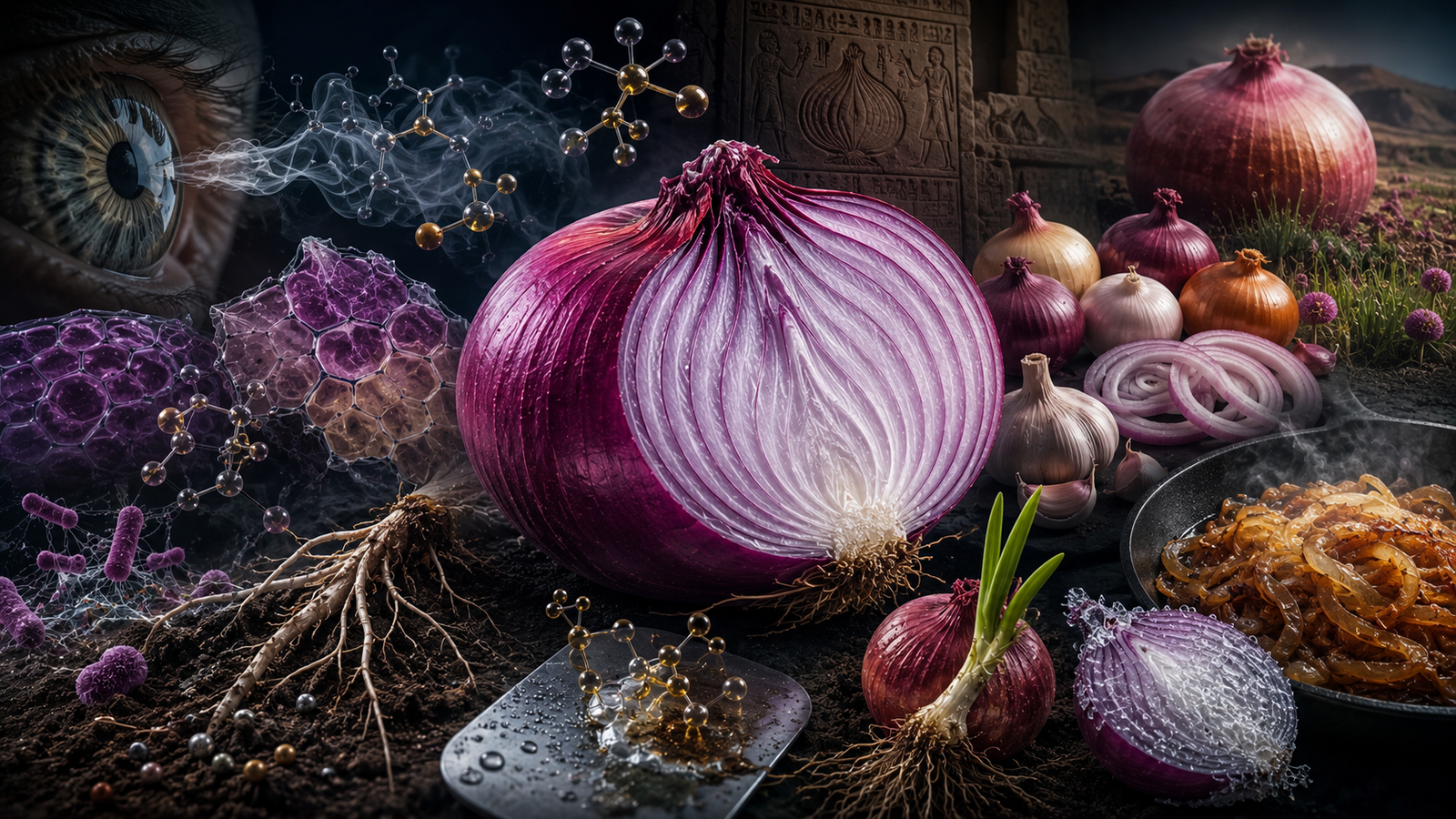
    Cutting an onion triggers a remarkable chemical defense system. When its cells are damaged, enzymes act on sulfur-containing compounds and ultimately produce a volatile irritant called syn-propanethial-S-oxide. This compound reaches your eyes and contributes to irritation that triggers more tears. In other words, the onion is activating a chemical defense system that makes your eyes respond.

    The surprising part: Your tears are actually part of your eyes’ natural defense response to the onion’s chemistry.

    Source: An onion enzyme that makes the eyes water – Nature

    2. The Onion Is Secretly a Survival Battery

    An onion bulb is essentially a food-storage organ for the plant. It stores carbohydrates and other nutrients that provide energy when the plant needs to survive unfavorable conditions and later produce new growth. When an onion begins sprouting, the developing leaves use these stored resources to grow-even before the plant has established a large photosynthetic leaf system. What looks like an ordinary kitchen vegetable is actually a compact biological survival package.

    The surprising part: The onion you eat is storing energy for the plant’s future growth.

    Source: Physiological, biochemical and transcriptional analysis of onion bulbs during storage – Plant Physiology

    3. Every Onion Has Invisible Chemical Weapons

    An onion has a sophisticated chemical defense system that activates when its tissues are damaged. Cutting or chewing the bulb allows enzymes and sulfur-containing compounds to interact, producing pungent chemicals that can discourage insects, microbes, and animals from feeding on the plant. These compounds are part of the onion’s natural defense strategy, helping protect its tissues from biological threats.

    The surprising part: That strong onion smell and sharp taste are partly the result of a built-in chemical defense system.

    Source: An Appraisal of Developments in Allium Sulfur Chemistry – Molecules

    4. Onion Rings Are Actually Modified Leaves

    Those concentric rings aren’t just decorative layers. An onion bulb is made largely from thickened leaf bases packed tightly around a very short stem. These fleshy leaf bases store nutrients that the plant can later use for growth. So when you cut an onion and see its familiar rings, you’re actually looking at layers of modified leaves arranged around the plant’s growing point.

    The surprising part: The onion bulb is not a root-it is mainly a compact storage structure built from modified leaves.

    Source: Physiological, biochemical and transcriptional analysis of onion bulbs during storage – Plant Physiology

    5. Onions Can Take Up Heavy Metals From Polluted Soil

    Onion plants can absorb certain heavy metals, including elements such as cadmium and lead, from contaminated soil and accumulate some of them in their tissues. This characteristic has made Allium cepa useful in research involving environmental pollution and biological monitoring. But it also highlights why growing edible crops in contaminated soil can create a food-safety concern.

    The surprising part: An onion plant can respond to and accumulate pollutants from the soil-but that does not make contaminated crops safe to eat.

    Source: Certain antioxidant enzymes of Allium cepa as biomarkers for the detection of toxic heavy metals in wastewater – PubMed

    6. Purple Onions Have Natural Cell-Protecting Pigments

    Purple onions get much of their deep red-purple color from anthocyanins, a group of plant pigments with antioxidant activity. These compounds help plants respond to environmental stress and can contribute to the onion’s antioxidant properties. Their concentration can vary with onion variety and growing conditions, which is one reason purple onions can differ noticeably in color intensity.

    The surprising part: The vivid purple color isn’t just decoration-it comes from biologically active pigments produced by the plant.

    Source: Onion anthocyanins: Extraction, stability, bioavailability, dietary effect, and health implications – PMC

    7. Why Do Onions Smell Stronger After Cutting?

    An intact onion keeps many of its enzymes and sulfur-containing molecules separated inside different parts of its cells. Cutting destroys those cellular compartments, allowing the chemicals to mix and triggering rapid enzymatic reactions that produce volatile sulfur compounds. These compounds escape into the air, making the freshly cut onion smell much stronger than an intact one.

    The surprising part: Cutting an onion doesn’t simply release its smell-it triggers chemical reactions that produce many of the volatile compounds responsible for that smell.

    Source: Investigation of Volatiles Emitted from Freshly Cut Onions – PMC

    8. Why Were Onions Important to Ancient Egyptians?

    Onions were an important part of ancient Egyptian life, appearing in food, art, and funerary contexts. Archaeological evidence shows onions among food offerings and depictions associated with ancient Egyptian tombs. Their distinctive layered structure may also have contributed to later interpretations of symbolic meaning, although the specific symbolism should not be treated as universally established.

    The surprising part: Thousands of years ago, this ordinary vegetable was important enough to appear in ancient Egyptian funerary and artistic contexts.

    Source: Ancient Egyptian tomb relief featuring onions – Smithsonian Institution

    9. Onions and Garlic Are Close Relatives

    Onions and garlic belong to the same plant genus, Allium, which also includes leeks, shallots, and chives. Their characteristic pungent aromas and flavors come largely from sulfur-containing compounds that are produced when their cells are damaged. So the distinctive smell of both onion and garlic comes from related chemical systems inherited from close botanical relatives.

    The surprising part: Onions and garlic may taste different, but much of their characteristic chemistry comes from the same botanical family.

    Source: The analysis of onion and garlic – PubMed

    10. Some Onions Are Sweeter Than Others

    Onion flavor depends on a balance between sugars and pungent sulfur compounds. Variety, growing conditions, soil, temperature, and maturity can all influence this chemistry. Onions with more sugars and fewer pungent sulfur compounds generally taste milder and sweeter, while others produce a much sharper bite.

    The surprising part: An onion’s sweetness isn’t determined by sugar alone-the balance between sugars and sulfur compounds shapes its overall flavor.

    Source: Characterization of Shortday Onion Cultivars of 3 Pungency Levels – PubMed

    11. Can Onions Kill Bacteria?

    Laboratory studies have found that certain onion extracts and their sulfur-containing compounds can inhibit the growth of some bacteria. However, these findings do not mean that eating onions can treat bacterial infections. Antimicrobial activity observed in laboratory experiments is different from a proven medical treatment in humans.

    The surprising part: Onion compounds can show antimicrobial effects in the laboratory, but onions are not a substitute for antibiotics or medical treatment.

    Source: In vitro antibacterial activity of onion against clinical isolates of Vibrio cholerae – PubMed

    12. Why Do Chilled Onions Reduce Tears?

    Chilling an onion before cutting it is commonly reported to reduce tearing because lower temperatures can slow the enzyme-driven reactions involved in producing volatile irritating compounds. Cooling does not stop the chemistry completely, and the size of the effect can depend on the onion and cutting conditions.

    The surprising part: A simple chill may slow some of the onion’s tear-producing chemistry before you start cutting it.

    Source: Why Onions Make You Cry – Serious Eats

    13. The World’s Heaviest Onion Weighed 8.97 Kilograms

    Some onions can grow to astonishing sizes under carefully controlled growing conditions. The current Guinness World Records record is 8.97 kilograms, achieved by Gareth Griffin in the United Kingdom in 2023. Reaching such enormous size depends on genetics, variety, growing conditions, nutrition, water supply, and a long growing period.

    The surprising part: A single onion can grow to a weight greater than a typical bowling ball.

    Source: Heaviest onion – Guinness World Records

    14. Onions Change Flavor When Cooked

    Cooking transforms an onion’s flavor through heat-driven chemical reactions. As the onion heats, some pungent sulfur compounds break down or are lost, reducing its sharp bite. At the same time, water is lost and naturally occurring sugars become more concentrated; with sufficient heat, browning reactions create additional complex flavors, producing the characteristic sweet, rich taste of cooked onions.

    The surprising part: Cooking doesn’t simply make onions sweeter-it changes their chemistry, reducing pungency while creating a much richer flavor.

    Source: Change in organosulfur compounds in onion during heat treatment – PMC

    15. Wild Onions Helped Humans Find Food in the Past

    Wild onions and other edible Allium plants have been gathered and eaten by people for thousands of years. Their edible bulbs, leaves, and flowers provided nutrients and distinctive flavors in traditional diets. Archaeological evidence from North America shows that wild onion bulbs were gathered and consumed by prehistoric communities.

    The surprising part: Long before modern agriculture, wild relatives of today’s onions could provide people with an accessible source of edible plant food.

    Source: Wild Onion – Texas Beyond History

    16. Why Do Onions Sprout at Home?

    An onion bulb is still a living plant structure after harvest. When it encounters suitable moisture, temperature, and other environmental conditions, its dormant growing tissues can become active and send out new green shoots and roots. The developing sprout initially relies heavily on nutrients stored inside the bulb to support this new growth.

    The surprising part: A sprouting onion isn’t simply spoiling-it is a living plant waking up and using its stored food to grow again.

    Source: Physiological, biochemical and transcriptional analysis of onion bulbs during storage – PMC

    17. Why Can Sulfur Compounds Make Silver Turn Black?

    Onions contain sulfur-containing compounds, and sulfur chemistry is also responsible for the familiar dark tarnishing of silver. When silver reacts with sulfur-containing compounds or gases under suitable conditions, it can form silver sulfide, a dark compound that appears as black tarnish on the metal’s surface. The chemistry is well established, although the extent to which an ordinary onion directly tarnishes silver depends on the conditions.

    The surprising part: The sulfur chemistry associated with pungent substances can contribute to the black tarnishing of silver.

    Source: Silver to Black – Journal of Chemical Education

    18. The Biggest Secret: Onions Are Modified Leaves, Not Roots

    An onion bulb is mainly a swollen storage structure formed from the thickened bases of modified leaves surrounding a very short stem. These fleshy layers store carbohydrates and other nutrients that fuel future growth. The roots grow from the basal plate underneath the bulb, which is why the onion you eat is botanically very different from a root such as a carrot or radish.

    The surprising part: The onion bulb isn’t a root at all-it’s a tightly packed storage structure made largely from modified leaves.

    Source: Physiological, biochemical and transcriptional analysis of onion bulbs during storage – PMC


    Conclusion

    An onion may look like one of the simplest vegetables in your kitchen, but its biology tells a very different story. Its layers store energy, its cells manufacture defensive chemicals, its pigments create vivid colors, its chemistry changes when cut or cooked, and its bulb can remain alive long after harvest. The next time you cut an onion, you’re not just preparing food-you are interacting with a remarkably sophisticated plant structure.

    Interactive Knowledge Check

    Onion Science Challenge

    Test what you just learned from this article. Tap the correct answer!