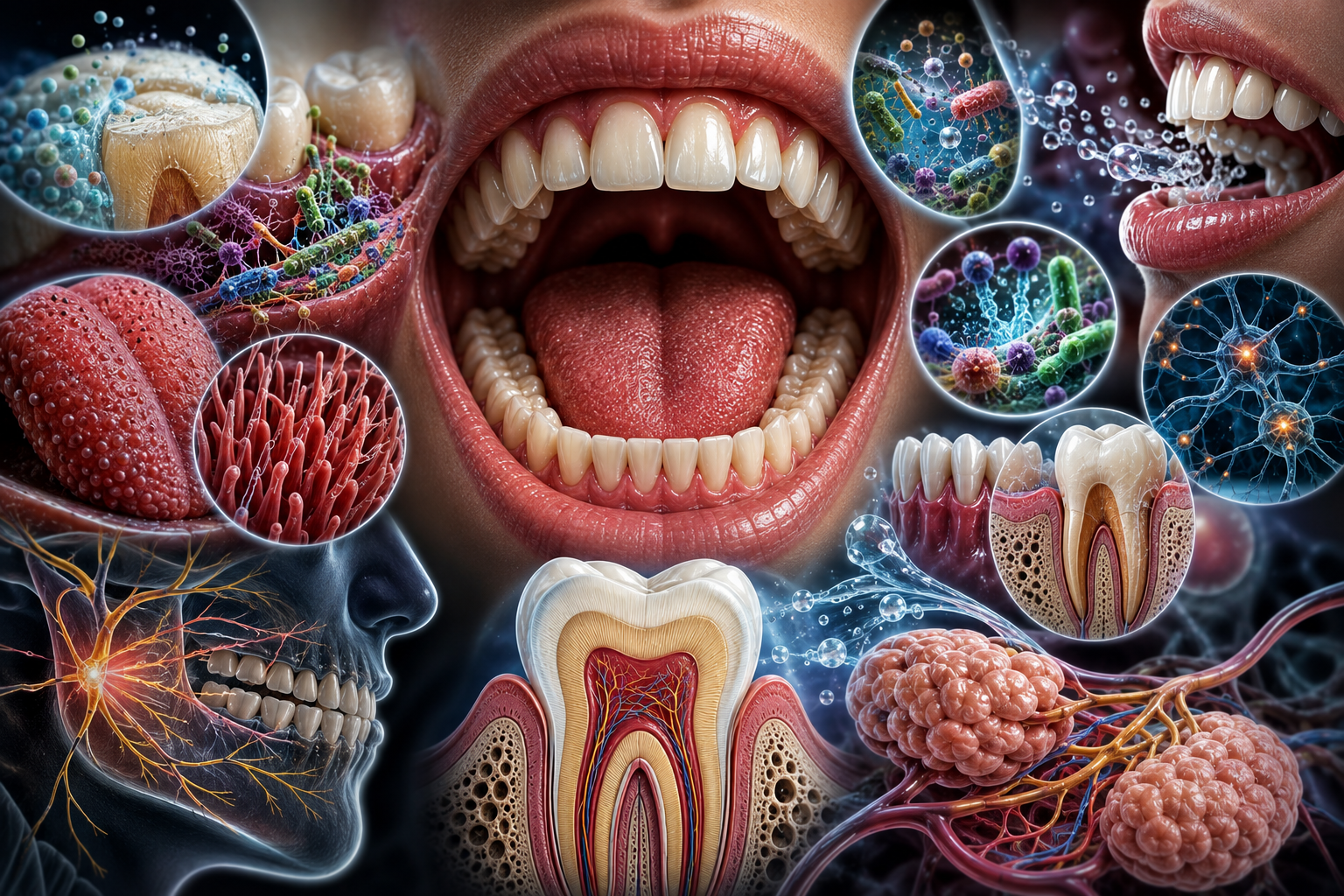
Did you know tooth enamel is the hardest substance in the human body?
हमारा मुँह सिर्फ खाना चबाने और निगलने की जगह नहीं है। इसके अंदर हर समय एक जटिल biological system काम करता रहता है, जिसमें saliva, teeth, tongue, gums, microorganisms, nerves और immune defenses लगातार एक-दूसरे के साथ interact करते हैं। आइए जानते हैं मानव मुँह के अंदर होने वाली 18 ऐसी अद्भुत बातें, जिनके बारे में बहुत कम लोग सोचते हैं।
1. Why Does the Human Mouth Function Like a Living Chemical Laboratory?
लार में proteins, enzymes, minerals और antimicrobial components होते हैं। ये भोजन को नम करने, निगलने, digestion की शुरुआत करने, दाँतों की सुरक्षा और oral microorganisms को नियंत्रित करने में भूमिका निभाते हैं।
आधिकारिक स्रोत: National Institute of Dental and Craniofacial Research (NIDCR)
2. How Does Saliva Actively Remineralize and Protect Tooth Enamel?
खाने के बाद acids के कारण enamel से कुछ minerals निकल सकते हैं। लार में मौजूद calcium और phosphate जैसे minerals तथा saliva की buffering क्षमता शुरुआती demineralization के बाद remineralization में मदद करती है। शुरुआती अवस्था में tooth decay को रोका या reverse किया जा सकता है, लेकिन पूरी तरह नष्ट हो चुके enamel को लार वापस नहीं उगा देती।
आधिकारिक स्रोत: NIDCR — Tooth Decay | American Dental Association — Salivary Diagnostics
3. How Does the Tongue Sense Taste and Send Instant Signals to the Brain?
जीभ की सतह पर मौजूद papillae और sensory structures भोजन की texture, दबाव और अन्य mechanical sensations को महसूस करने में मदद करते हैं। इसलिए खाना खाते समय हम सिर्फ उसका स्वाद नहीं, बल्कि उसकी बनावट भी महसूस करते हैं।
आधिकारिक स्रोत: NIDCR — Taste Disorders
4. How Does Saliva Neutralize Harmful Acids and Maintain Oral pH Balance?
खाने और पीने के बाद oral environment का pH बदल सकता है। Saliva acids को buffer करने, मुँह को साफ रखने और दाँतों की mineral balance बनाए रखने में मदद करती है।
आधिकारिक स्रोत: American Dental Association — Salivary Diagnostics
5. Why Can You Not Taste Dry Food Without Saliva Dissolving It First?
भोजन के कई chemical compounds को taste receptors तक पहुँचने के लिए saliva में घुलना पड़ता है। इसी कारण saliva की कमी होने पर taste perception प्रभावित हो सकती है।
आधिकारिक स्रोत: NIDCR — Dry Mouth | NIDCR — Taste Disorders
6. Why Do Teeth Hurt When Drinking Ice-Cold Water? (Dentin Sensitivity)
दाँत की sensitivity में बाहरी तापमान परिवर्तन dentin में मौजूद microscopic tubules के fluid को प्रभावित कर सकता है। इस fluid movement से pulp के पास sensory nerve endings उत्तेजित हो सकती हैं और तेज sensation या pain महसूस हो सकता है।
आगे पढ़ें: NIDCR — Tooth Decay and Tooth Sensitivity
7. How Many Billions of Bacteria Live Inside the Oral Microbiome?
मानव मुँह में bacteria, fungi, viruses और अन्य microorganisms की विविध community रहती है। ये जीभ, दाँतों, मसूड़ों और अन्य oral surfaces पर अलग-अलग परिस्थितियों में पाए जाते हैं।
आधिकारिक स्रोत: NIDCR — Exploring the Mouth’s Microbial Wonders
8. Why Are the Deep Grooves of the Tongue a Shelter for Microorganisms?
जीभ की असमान सतह और papillae के बीच की जगहों में saliva, food residues और microorganisms जमा हो सकते हैं। इसी वजह से जीभ oral microbial ecosystem का एक महत्वपूर्ण habitat है।
आधिकारिक स्रोत: NIDCR — Exploring the Mouth’s Microbial Wonders
9. What Exactly Is Dental Plaque and How Does It Form Living Biofilms?
Dental plaque एक structured microbial biofilm है। इसमें microorganisms एक sticky matrix के भीतर organized community बना सकते हैं और tooth surface से चिपके रह सकते हैं।
आधिकारिक स्रोत: NIDCR — Dental Plaque and Flossing | NIDCR — Probing Periodontal Disease
10. How Do Oral Bacteria Convert Dietary Sugars Into Enamel-Eroding Acid?
कुछ oral bacteria dietary carbohydrates को metabolize करके acids बना सकते हैं। ये acids tooth enamel से minerals निकालने की प्रक्रिया, यानी demineralization, को बढ़ा सकते हैं। अगर यह प्रक्रिया बार-बार होती रहे और protective factors पर्याप्त न हों, तो tooth decay विकसित हो सकता है।
आधिकारिक स्रोत: NIDCR — Tooth Decay | American Dental Association — Caries Risk Assessment and Management
11. Why Does Morning Breath Occur When Saliva Flow Slows Down at Night?
नींद के दौरान salivary flow सामान्यतः कम हो जाता है। इससे saliva की cleansing और buffering activity कम हो सकती है, जिससे microorganisms और odor-producing compounds अधिक noticeable हो सकते हैं। यही morning breath के प्रमुख कारणों में से एक है।
आधिकारिक स्रोत: NIDCR — Dry Mouth
12. How Do Healthy Gums Form a Tight Physical Barrier Against Infection?
Gum tissue और tooth के बीच का junction oral environment और deeper tissues के बीच एक महत्वपूर्ण biological barrier है। स्वस्थ periodontal tissues microorganisms और उनके products को deeper tissues तक पहुँचने से सीमित करने में मदद करते हैं।
आधिकारिक स्रोत: NIDCR — Probing Periodontal Disease
13. Why Does 80% of What We Call “Flavor” Actually Come From Smell?
Taste receptors sweet, sour, bitter, salty और savory जैसी taste qualities को detect करते हैं। भोजन से निकलने वाले volatile molecules smell system को activate करते हैं। Taste और smell मिलकर हमारे flavor perception में योगदान देते हैं।
आधिकारिक स्रोत: NIDCR — Taste Disorders
14. How Does the Human Mouth Continuously Clean and Flush Itself?
Saliva का flow, tongue movement, cheek movement और swallowing मिलकर loose food particles तथा अन्य पदार्थों को oral surfaces से हटाने में मदद करते हैं। Saliva oral tissues को lubricate और protect भी करती है।
आधिकारिक स्रोत: NIDCR — Saliva and Salivary Gland Disorders | NIDCR — Dry Mouth
15. What Natural Antimicrobial Enzymes and Antibodies (IgA) Protect the Mouth?
Saliva में antibodies और कई antimicrobial components होते हैं, जो oral microorganisms को नियंत्रित करने में मदद करते हैं। इसलिए saliva केवल digestion की शुरुआत करने वाला fluid नहीं है; यह oral defense system का भी हिस्सा है।
आधिकारिक स्रोत: NIDCR — Saliva and Salivary Gland Disorders
16. How Do Microscopic Periodontal Sensors Prevent Us From Biting Too Hard?
दाँत के आसपास periodontal tissues में sensory nerve endings मौजूद होते हैं। जब चबाने के दौरान दाँत पर force लगता है, ये sensory structures mechanical information detect करने में मदद करते हैं। इससे nervous system को bite force और tooth position के बारे में जानकारी मिलती है।
आधिकारिक स्रोत: NIDCR — Somatosensation and Pain Research
17. Why Does Chewing Stimulate Digestive Saliva Production in the Body?
Chewing oral sensory signals को activate करता है, जिससे salivary glands की secretion बढ़ सकती है। बढ़ी हुई saliva food को lubricate करती है, swallowing आसान बनाती है और oral acids को dilute तथा buffer करने में मदद करती है।
आधिकारिक स्रोत: NIDCR — Saliva and Salivary Gland Disorders
18. Are Human Teeth Living Organs With Blood Vessels and Nerves?
दाँत के केंद्र में dental pulp नाम का living tissue होता है, जिसमें blood vessels, nerves और connective tissue मौजूद होते हैं। इसलिए दाँत बाहर से अत्यंत कठोर दिखाई देने के बावजूद अंदर से एक जीवित biological structure है।
आधिकारिक स्रोत: NIDCR — Tooth Decay
निष्कर्ष
मानव मुँह एक बेहद जटिल biological ecosystem है। यहाँ saliva लगातार chemical protection देती है, teeth mineral loss और remineralization के cycles से गुजरते हैं, tongue sensory information collect करती है, microorganisms अपना ecosystem बनाते हैं, gums protective barrier प्रदान करते हैं और nerves लगातार mechanical तथा thermal signals detect करती हैं। यानी हम हर समय अपने मुँह के अंदर एक microscopic biological world लेकर घूम रहे हैं।
महत्वपूर्ण नोट: यह लेख सामान्य वैज्ञानिक जानकारी के लिए है। लगातार दाँत के दर्द, sensitivity, bleeding gums, dry mouth या किसी अन्य oral समस्या के लिए dentist या qualified healthcare professional से सलाह लें।
People Also Ask About human mouth science facts
Direct, science-backed answers to the most common search questions.
How does saliva protect tooth enamel from decay?
Saliva contains calcium and phosphate ions that actively remineralize microscopic acid lesions in enamel. Bicarbonate buffers in saliva neutralize oral acids within 20 to 30 minutes after eating.
Why does morning breath happen even if you brush before bed?
During sleep, salivary gland output drops significantly. Without constant saliva flow to flush away dead epithelial cells and bacteria, anaerobic bacteria on the back of the tongue multiply and break down proteins into volatile sulfur compounds (VSCs).
Can you taste dry food without saliva?
No. Taste buds located in lingual papillae can only detect flavor molecules that are dissolved in liquid. If your tongue is completely dry, taste receptor cells cannot interact with dry food particles.
Are human teeth considered living organs?
Yes. While enamel on the exterior is non-living mineral, beneath it lies living dentin and the dental pulp containing blood vessels, nerves, and odontoblast cells that respond to temperature, pressure, and infection.
Prefer Visual Learning? Watch Deepak Explains It
Deepak Kumar decodes nature’s greatest mysteries, botany, and everyday science into viral 60-second animated video reels and Shorts. Follow across YouTube, Facebook, and Instagram:
Human Mouth Biology Quiz
Test what you just learned from this article. Tap the correct answer!
Leave a Reply